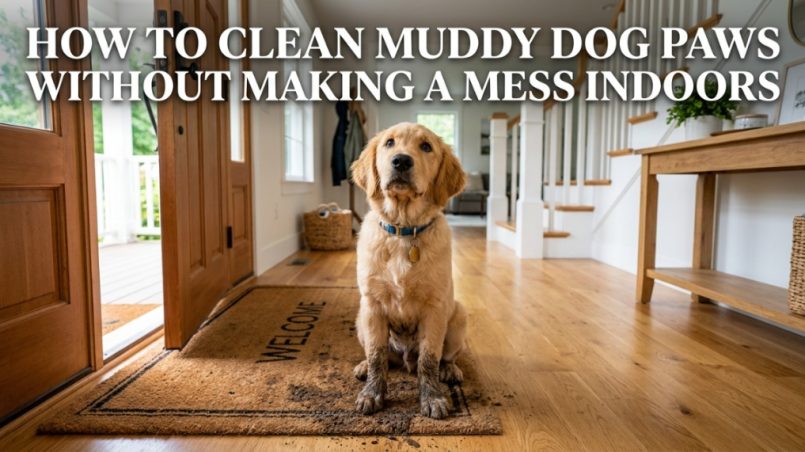
Your dog just sprinted through a rain-soaked yard, and now four mud-caked paws are headed straight for your white couch. Here’s the truth most pet owners learn the hard way: the mess doesn’t start at the door—it starts because you don’t have a system. A dog paw cleaner paired with a 30-second routine at the entryway eliminates tracked-in mud entirely, saving your floors, rugs, and sanity. The real frustration isn’t the mud itself. It’s scrubbing dried paw prints off hardwood at 10 PM, tossing another towel into the laundry pile, or watching your freshly mopped kitchen turn brown within seconds. Dirty paws also carry bacteria, lawn chemicals, and allergens deep into your living space. If you’ve ever Googled “how to clean muddy dog paws” while staring at a trail of prints across your carpet, this guide gives you the exact methods, tools, and routines that actually work—without wrestling your dog or flooding your entryway.
What Is the Fastest Way to Clean Muddy Dog Paws at the Door?
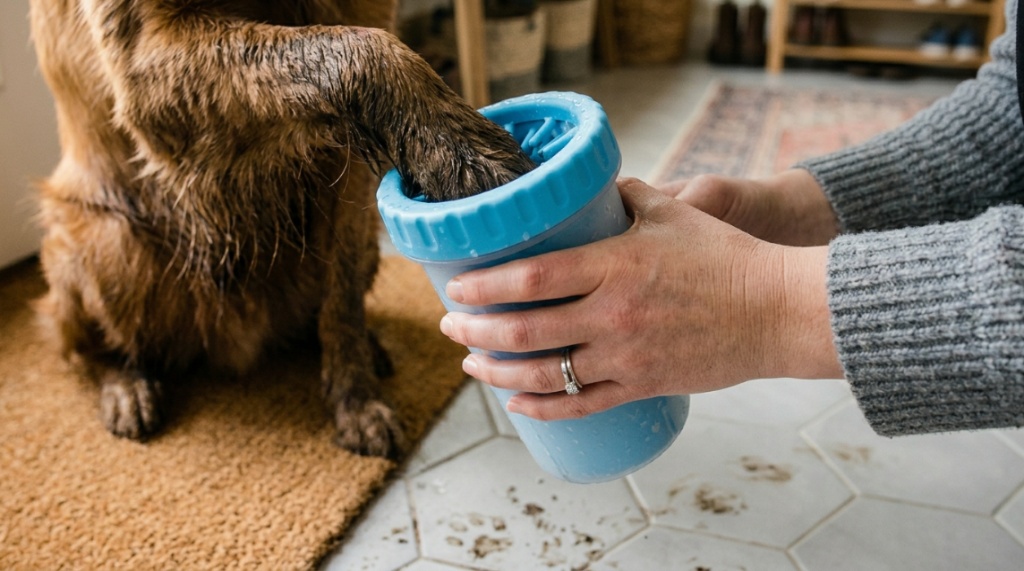
The fastest method is using a portable dog paw cleaner cup filled with warm water—insert each paw, twist gently for five seconds, and pat dry with a microfiber towel. The entire process takes under two minutes for all four paws.
Speed matters because dogs won’t stand still forever. A silicone-bristle paw washer cup agitates mud loose without scrubbing, and the contained water means zero splashing on your floor. Place your station right inside the door you use most after walks. Keep a dedicated towel hanging on a hook within arm’s reach. This eliminates the “hold on, let me grab something” delay that gives your dog time to bolt inside.
For heavy mud, a quick pre-wipe with a damp cloth removes the worst clumps before using the cup. This two-step approach prevents the water inside the cleaner from turning into a mud bath after the first paw. If you’re looking for guidance on handling dogs safely during grooming routines, proper technique reduces stress for both you and your pet.
- Fill paw cleaner cup halfway with lukewarm water
- Insert paw and rotate cup gently 5–7 times
- Remove paw and immediately blot with microfiber towel
- Repeat for remaining paws
- Empty dirty water into sink or outside drain
Does a Dog Paw Cleaner Actually Work Better Than Towels Alone?
Yes. A dedicated dog paw cleaner removes 80–90% of mud and debris trapped between paw pads, while towels alone only address surface-level dirt and often smear mud deeper into the fur.
Towels work fine for light dampness or dust. But when your dog steps in thick, clay-heavy mud, towel wiping pushes particles into the crevices between toes and pads. Those particles dry, harden, and eventually get deposited on your floors hours later when your dog walks around the house. A paw washer with soft bristles reaches between pads and dislodges debris that wiping simply cannot.
The difference becomes obvious over time. Homes using only towels typically show more residual dirt near dog beds and resting spots. Homes using a bristle-based paw cleaning tool stay noticeably cleaner with less frequent mopping. If you want to try a dog paw cleaner designed for heavy Texas mud and clay soil, the investment pays for itself in reduced cleaning time within the first week.
| Method | Mud Removal | Time Per Paw | Mess Level | Best For |
|---|---|---|---|---|
| Towel only | 40–50% | 10–15 seconds | Low | Light dampness, dust |
| Paw cleaner cup | 80–90% | 5–10 seconds | Very low | Moderate to heavy mud |
| Sink/tub rinse | 95–100% | 30–60 seconds | High | Extreme mud, post-hike |
| Paw wipes | 50–60% | 15–20 seconds | None | Quick touch-ups, allergens |
| Outdoor hose spray | 90–95% | 20–30 seconds | Medium (outdoor) | Large dogs, very muddy conditions |
How Do You Train a Dog to Let You Clean Their Paws?
Start by pairing paw handling with high-value treats during calm moments—not after an exciting walk. Within one to two weeks of daily practice, most dogs willingly offer their paws at the door.
The mistake most owners make is introducing paw cleaning only when the dog is already amped up from a walk. At that point, they want to run inside, drink water, and explore. Instead, practice “paw” as a trick during quiet evenings. Hold the paw gently, reward, release. Gradually introduce the sensation of a wet cloth, then the paw cup with just a small amount of water.
Dogs that resist paw handling often have a negative association—maybe someone gripped too hard or water was too cold. Reset by making every paw interaction brief and rewarding. Three seconds of handling followed by a treat builds trust faster than forcing a full cleaning session.
- Week 1: Touch and hold each paw for 2–3 seconds, treat immediately
- Week 2: Introduce a dry towel touch on paw pads, treat
- Week 3: Use a damp towel, then treat
- Week 4: Introduce the paw cleaner cup with minimal water, treat generously
Consistency matters more than duration. A dog that gets paw-cleaned after every single walk—even when paws are barely dirty—learns the routine faster than one who only faces it during muddy emergencies.
What Should You Put in a Muddy Paw Cleaning Station?
A complete paw cleaning station needs five items: a silicone paw washer, two microfiber towels, a small mat or tray, a treat jar, and a spray bottle with diluted dog-safe cleanser for heavy soil days.
Location is everything. Place your station at the door your dog uses most—usually the back door leading to the yard. Wall-mount a small shelf or use a boot tray to keep everything contained. The goal is zero setup time. If you have to gather supplies, you’ll skip the routine on busy days, and that’s when mud gets tracked everywhere.
For the mat, choose a washable rubber-backed option that catches drips. Microfiber towels outperform regular cotton because they absorb three times more water and dry faster between uses. Keep one towel for the initial wipe and one for the final dry. Rotate them into the laundry every two to three days.
The treat jar is non-negotiable if you have a dog that fidgets. One treat per completed cleaning session reinforces cooperation without overfeeding. Use small, low-calorie training treats rather than full-size biscuits.
Can Muddy Dog Paws Cause Health Problems Indoors?
Yes. Muddy paws carry bacteria, parasites, pesticides, and mold spores into your home. Studies show outdoor soil contains an average of 10,000 bacteria types per gram, many of which transfer directly to indoor surfaces through paw prints.
The health concern goes beyond general dirtiness. Dogs walking through treated lawns pick up herbicides and fertilizers on their pads. These chemicals end up on floors where children crawl and play. Paws that contact standing water may carry leptospirosis bacteria or giardia cysts. In humid climates, mud trapped between paw pads creates a warm, moist environment where yeast and bacteria thrive—leading to paw infections in the dog itself.
Regular paw cleaning protects both human and canine health. It also gives you a daily opportunity to inspect paw pads for cuts, thorns, cracked skin, or unusual growths. Many veterinarians recommend a brief paw check after every outdoor session as part of preventive care.
- Bacteria and parasites from soil and standing water
- Lawn chemicals including herbicides, pesticides, and fertilizers
- Mold spores from damp ground and leaf litter
- Road salt and de-icing chemicals in winter months
- Allergens including pollen and ragweed trapped in mud
What Is the Best DIY Solution for Cleaning Dog Paws?
A mixture of warm water with a few drops of dog-safe liquid soap (like diluted oatmeal shampoo) works as an effective homemade paw cleaning solution that’s gentle on pads and tough on mud.
Avoid dish soap, bleach, or any product containing essential oils like tea tree—these can irritate or damage paw pads with repeated use. Oatmeal-based dog shampoo diluted at a 10:1 water-to-shampoo ratio cleans effectively without stripping natural oils from the skin.
For dogs with sensitive paws or allergies, plain warm water works surprisingly well when combined with a bristle-based paw cleaner. The mechanical action of soft bristles does most of the cleaning work. The soap is only necessary for greasy mud, road grime, or when your dog rolled in something foul.
Apple cider vinegar diluted 50:50 with water serves as a natural antifungal rinse for dogs prone to yeast infections between their toes. Use this as a final rinse after cleaning, not as the primary wash. Always dry paws thoroughly after any wet cleaning to prevent moisture-related skin issues.
How Do You Keep Floors Clean When You Have a Muddy Dog?
Combine a door-side paw cleaning routine with strategic floor protection—washable runners in high-traffic paths, a waterproof mat at the entry point, and a “dry zone” rule where your dog waits until paws are confirmed clean.
The paw cleaning routine handles 90% of the problem. The remaining 10% comes from damp fur on legs and bellies, especially in long-haired breeds. For these dogs, keep a dedicated “belly towel” at your cleaning station. A quick swipe across the undercarriage catches drips that would otherwise hit the floor two minutes later.
Washable hallway runners are underrated. Place one from your entry door to wherever your dog typically settles after a walk. These catch any residual moisture and can be machine-washed weekly. Choose dark colors or patterns that hide minor staining between washes.
For hardwood floors specifically, a robot vacuum scheduled to run daily picks up dried micro-particles that escape even thorough paw cleaning. This combination—paw cleaning at the door plus daily automated vacuuming—keeps floors looking clean without constant manual mopping.
When Should You Use Paw Wipes vs. a Paw Washer?
Use paw wipes for quick allergen removal, light dust, or when traveling. Use a paw washer for actual mud, heavy soil, or any time you can see debris packed between paw pads.
Paw wipes are convenient but limited. They excel at removing surface pollen, light dirt, and road dust. They’re perfect for apartment dogs who walk on sidewalks and rarely encounter real mud. They’re also ideal for travel—toss a pack in your car for post-park cleanups.
However, wipes cannot reach between tightly packed paw pads or remove clay-based mud that adheres to fur. For dogs that play in yards, hike trails, or live in rainy climates, a paw washer is the primary tool and wipes serve as a supplement for dry days.
Cost also factors in. A reusable paw cleaner cup costs $10–$20 and lasts years. Paw wipes run $8–$15 per pack of 100, and heavy users go through a pack every two to three weeks. Over a year, the paw washer saves $150–$200 compared to wipe-only cleaning.
Conclusion
Cleaning muddy dog paws doesn’t require complicated setups or expensive equipment. A silicone paw cleaner, two microfiber towels, and a consistent 90-second routine at the door eliminates tracked-in mud from your home. The key is making it automatic—same spot, same tools, same sequence after every outdoor session. Your dog learns the pattern, your floors stay clean, and you stop spending evenings scrubbing dried paw prints off tile and carpet.
Start today by choosing one entry point and setting up your cleaning station. Within a week, you’ll notice dramatically less dirt throughout your home. Within a month, your dog will stand and wait at the door expecting the routine. That’s the goal—a calm, cooperative process that protects your home and your dog’s paw health simultaneously. For more practical tips on staying safe and confident around dogs, building good handling habits starts with routines exactly like this one.
Frequently Asked Questions
How often should I clean my dog’s paws?
Clean your dog’s paws after every walk or outdoor play session where they contact mud, wet grass, or treated surfaces. Even on dry days, a quick wipe removes allergens and bacteria picked up from sidewalks and soil.
Can I use baby wipes on my dog’s paws?
Baby wipes are generally safe for occasional use but may contain fragrances, alcohol, or propylene glycol that irritate paw pads with daily use. Choose wipes specifically formulated for dogs, or use plain water with a cloth for daily cleaning.
What do groomers use to clean dog paws?
Professional groomers typically use a shallow warm water bath with diluted dog shampoo, followed by thorough drying. Some use chlorhexidine-based solutions for dogs with recurring paw infections. For routine cleaning, they rely on the same silicone bristle tools available to home users.
How do I clean dog paws in winter without cold water?
Fill your paw cleaner cup with lukewarm water before heading outside, and keep it near a heat source so it stays comfortable. In winter, paw cleaning also removes harmful road salt and de-icing chemicals that can burn paw pads and cause stomach upset if licked.
Is it bad to let my dog lick mud off their own paws?
Yes. Mud may contain fertilizers, pesticides, bacteria like leptospira, or parasite eggs. Excessive licking also creates moisture between paw pads, promoting yeast and bacterial infections. Clean paws yourself rather than allowing self-grooming after muddy outings.
Do paw cleaning boots work as an alternative?
Dog boots prevent mud contact entirely and work well for dogs that tolerate them. However, many dogs resist boots, and they require their own cleaning routine. Boots are best for extreme conditions—deep mud, snow, hot pavement—while a paw cleaner handles everyday situations more practically.
How do I dry dog paws quickly after washing?
Microfiber towels absorb water fastest—press the towel around each paw and squeeze gently rather than rubbing. For dogs with long fur between pads, a low-heat blow dryer on the cool setting speeds drying and prevents moisture-related skin issues.