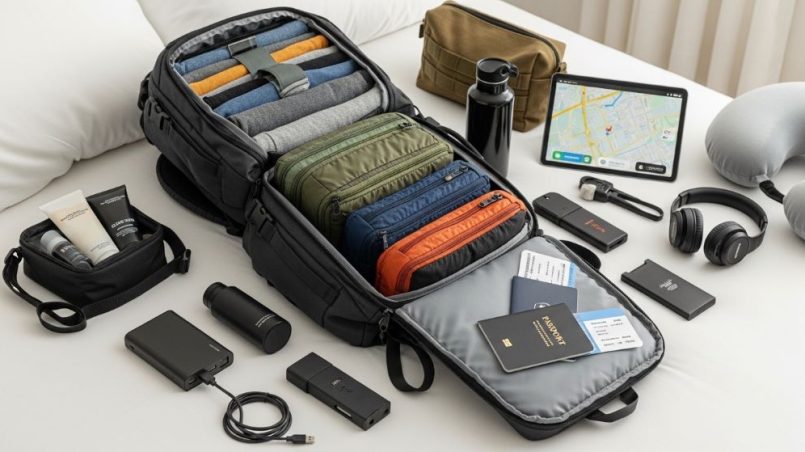
Traveling should be exciting. But poor preparation can turn any trip into a stressful experience. The wrong bag, a dead phone, or uncomfortable shoes can ruin what was supposed to be a great adventure. Therefore, choosing the right gear matters more than most men realize.
This guide breaks down exactly what to look for when selecting gear that actually helps — not just gear that looks good in a store. Whether you are planning a weekend road trip or a month-long international journey, these tips will help you make smarter choices every single time.
Why Your Gear Choice Matters More Than You Think
Most men underestimate the role gear plays in a trip’s success. You might not think twice about your bag until its strap breaks on day one. You might not consider your packing cubes until your clothes arrive wrinkled and disorganized.
Good gear does not just carry your stuff. It protects it, organizes it, and makes moving through airports, train stations, and hotels easier. Additionally, the right choices save you money over time. Buying cheap gear that falls apart means buying it twice.
The goal is to invest in items that serve you well across many trips. That means thinking carefully before every purchase.
Start With a Clear Travel Profile
Before buying anything, define what kind of traveler you are. This step shapes every decision that follows.
Ask yourself a few key questions. Do you travel for business, leisure, or both? Do you prefer carry-on only, or do you check bags? Are your trips mostly domestic or international? Do you move around a lot during a trip, or do you stay in one place?
Your answers create a travel profile. A business traveler who hops between cities needs different gear than a backpacker exploring national parks. Once you know your profile, you can shop with purpose instead of guessing.
The Foundation: Choosing the Right Bag
Everything starts with your bag. It is the most important piece of gear you will own as a traveler. Get this right, and everything else becomes easier.
Backpacks vs. Rolling Luggage
Backpacks work best for men who move frequently or travel to destinations with uneven terrain. They keep your hands free and fit easily into overhead bins. However, they require more physical effort and can strain your back if overpacked.
Rolling luggage, on the other hand, is ideal for urban travel and business trips. Hard-shell suitcases protect your belongings well and roll smoothly through airports. The trade-off is that they can be difficult on cobblestones, stairs, and rough sidewalks.
Some men solve this by owning both — a carry-on roller for business and a mid-size backpack for adventure travel. However, if you can only choose one, think about where you travel most and pick accordingly.
What to Look for in a Quality Travel Bag
Size matters, but so does structure. A bag with good organization — dedicated laptop sleeves, compression straps, and easy-access pockets — saves time and reduces frustration.
Look for materials that are water-resistant. Weather is unpredictable. A quick rain shower should not soak your electronics or your clothes. Additionally, check the zipper quality. Cheap zippers are the most common failure point in any bag.
Weight is another consideration. A bag that is already heavy when empty leaves less room for your actual belongings. Aim for lightweight construction without sacrificing durability.
Clothing: Pack Smart, Not Heavy
Packing smart means bringing fewer items that do more work. This is where many men go wrong. They pack too much, and they end up hauling things they never use.
The Multi-Use Mindset
Choose clothing that works in multiple contexts. A dark pair of chinos, for example, works for a dinner out and a casual meeting. A lightweight merino wool shirt looks clean, resists odors, and can be worn several days in a row.
Merino wool is one of the best travel fabrics available. It regulates temperature, dries quickly, and does not wrinkle easily. Therefore, it suits men who want to pack light without compromising on comfort or appearance.
Layering for All Conditions
Layering is the smartest approach to travel clothing. Instead of packing heavy items for every possible temperature, you pack thin layers that combine for warmth or separate for cooler conditions.
A base layer, a mid layer like a fleece or light down jacket, and a waterproof outer shell can handle a wide range of climates. This system works whether you are in a cool European city in autumn or a mountain destination in spring.
Electronics: The Gear That Keeps You Connected
Technology is now central to travel. Your phone is your map, your camera, your boarding pass, and your bank. Keeping it charged and protected is non-negotiable.
Power Solutions That Actually Work
A portable power bank is one of the most essential travel-friendly gear choices you can make. Look for one with at least 10,000 mAh of capacity. That gives you two to three full phone charges before you need to plug in.
Weight and size matter here. The best power banks offer high capacity in a compact form. Some even charge multiple devices at once, which is useful for men who carry a phone, earbuds, and a smartwatch.
Additionally, a universal travel adapter is a must for international trips. Outlets vary by country, and the wrong voltage can damage your devices. A quality adapter handles multiple plug types and includes built-in surge protection.
Protecting Your Electronics on the Move
Hard cases and padded sleeves are worth every penny. A cracked phone screen or a damaged laptop can derail an entire trip. Invest in good protection before you leave.
For cameras, a padded insert that fits inside your main bag keeps your gear safe without requiring a separate camera bag. This approach keeps your kit compact and your shoulders happy.
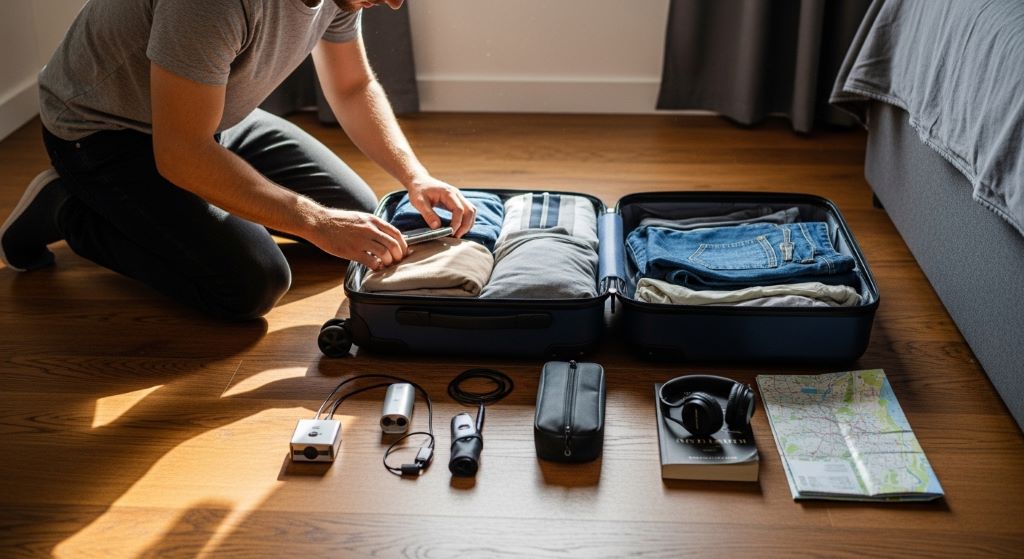
Organization Tools: The Unsung Heroes of Travel
Most men do not think about organization tools until they are digging through their bag for the third time looking for a charger. These items are small, lightweight, and make a bigger difference than you might expect.
Packing Cubes
Packing cubes divide your bag into zones. You might have one cube for shirts, one for pants, and one for underwear and socks. This system keeps your bag organized throughout the trip, even after you have unpacked and repacked several times.
They also compress your clothes, which means you can fit more into a smaller space. Many frequent travelers say packing cubes were the single best travel upgrade they ever made.
Cable and Tech Organizers
Cables have a talent for tangling. A simple cable roll or tech pouch keeps your charging cables, adapters, earbuds, and small electronics in one place. You will spend less time untangling and more time enjoying your destination.
Look for a pouch with elastic loops and a few zippered pockets. This gives you flexibility without adding bulk to your bag.
Footwear: Comfort Is Not Optional
Your feet carry you through every part of a trip. Uncomfortable shoes will slow you down and leave you miserable by midday. Therefore, footwear deserves serious thought.
One Pair That Does It All
For many trips, one versatile pair of shoes is enough. A quality pair of leather sneakers or clean minimalist shoes can work for walking tours, casual dinners, and light hiking. They take up far less space than packing multiple pairs.
If you need formal options, pack a pair of lightweight dress shoes that fold or compress slightly. Some travel-specific shoe brands make remarkably compact formal footwear without sacrificing style.
Sandals as a Secondary Option
A lightweight pair of sandals works well as a secondary option, especially for beach destinations or hostel showers. Look for pairs that pack flat and weigh next to nothing. These add almost no bulk to your bag but cover a wide range of informal situations.
Toiletries and Personal Care: Travel Light
Full-size toiletry bottles have no place in a carry-on bag. Investing in a set of high-quality travel bottles lets you bring exactly what you need in the right amounts.
TSA-compliant bottles must be 100ml or under for liquid items in carry-on bags. Buy a set of leak-proof silicone bottles and fill them yourself. This saves money compared to buying travel-size products repeatedly.
A hanging toiletry bag keeps your bathroom essentials organized and easy to access in hotel bathrooms. Look for one that unfolds and hangs on a hook, so you do not have to unpack everything onto a small sink ledge.
Gear for Specific Trip Types
Not all travel is the same. Here is a quick breakdown of priorities by trip type.
For business travel, focus on a sleek carry-on, a good laptop bag or sleeve, noise-canceling headphones, and wrinkle-resistant clothing. Looking sharp and staying productive are the main goals.
For adventure and outdoor travel, prioritize durability, weather resistance, and portability. A rugged daypack, moisture-wicking clothing, and a GPS device or offline maps app matter more than aesthetics.
For leisure and city travel, comfort and flexibility are key. Versatile clothing, comfortable shoes, and portable items like a compact umbrella or a lightweight day bag will serve you well throughout the trip.
Avoiding Common Gear Mistakes
Even experienced travelers make avoidable mistakes. Here are the most common ones and how to sidestep them.
Buying gear based on looks alone is a trap. A stylish bag that offers no organization or a sleek power bank with poor output are both bad investments. Always prioritize function over form.
Overpacking is another common issue. More gear does not mean better travel. In fact, it usually means more stress. Practice packing your bag a few days before your trip. If it feels heavy, take things out. You can almost always find what you need at your destination.
Ignoring weight limits is a costly mistake as well. Airlines are strict about carry-on dimensions and checked bag weight limits. Know the rules for your airline before you pack.
Finally, skipping a packing list leads to forgotten items. A simple list — even a note on your phone — ensures you never leave without something important.
How to Build Your Kit Over Time
You do not need to buy everything at once. Building a strong travel kit is a process that happens over several trips.
Start with the essentials: a good bag, a power bank, a travel adapter, and a basic toiletry setup. Then, after each trip, identify what was missing or what could be improved. Add to your kit based on real experience rather than theory.
This approach saves money and ensures every purchase solves an actual problem. Additionally, it keeps your gear collection lean and purposeful rather than full of items you bought on impulse and never used.
Conclusion
Choosing travel gear for men is not about buying the most expensive items or following every trend. It is about understanding your needs, investing in quality, and keeping things simple.
Start with a reliable bag that fits your travel style. Choose clothing that does more with less. Bring electronics that keep you powered and connected. Use organization tools to stay efficient. Pick footwear that serves multiple purposes.
Additionally, remember that travel-friendly gear and the right portable items can turn a stressful journey into a smooth one. Every item you carry should earn its place in your bag. When you approach packing that way, every trip becomes a little easier and a lot more enjoyable.
Build your kit thoughtfully, one piece at a time, and you will be ready for wherever the road takes you.
Frequently Asked Questions
What is the most important piece of travel gear for men?
A well-designed travel bag is the most important piece of gear. It determines how organized, mobile, and comfortable you will be throughout the trip. Everything else fits around it.
How do I choose between a backpack and rolling luggage?
Consider your destination and travel style. Backpacks work better for active travel and destinations with rough terrain. Rolling luggage suits business travel and urban environments with smooth surfaces.
Are packing cubes worth the investment?
Yes. Packing cubes keep your bag organized, help compress clothing, and make it easier to find items quickly. Most frequent travelers consider them essential after the first trip.
What should I always pack in my carry-on bag?
Always keep your travel documents, electronics, chargers, a change of clothes, any medications, and valuables in your carry-on. These are items you cannot afford to lose if your checked bag is delayed.
How many pairs of shoes should I pack for a week-long trip?
For most trips, two pairs are enough — one versatile everyday pair and one lightweight secondary option like sandals or dress shoes, depending on your activities. Packing more than two pairs usually adds unnecessary weight.
Related Topics:
5 ways to book a hotel room at a good price
Benefits of staying at a luxurious hotel
