Keeping a reef tank clean can feel like an endless battle. Fish waste, uneaten food, and debris quickly pollute the water, threatening your coral and marine life. Hobbyists debate the merits of protein skimmers and canister filters. But which delivers the healthiest, cleanest reef tank?
Quick Answer: For most reef tanks, a protein skimmer typically offers more benefits than a canister filter, effectively removing organic waste and maintaining superior water quality. However, the best choice often depends on your tank’s size, inhabitants, and maintenance preferences. Understanding both tools empowers you to make the ideal decision for your reef.
What is a protein skimmer, and how does it work?
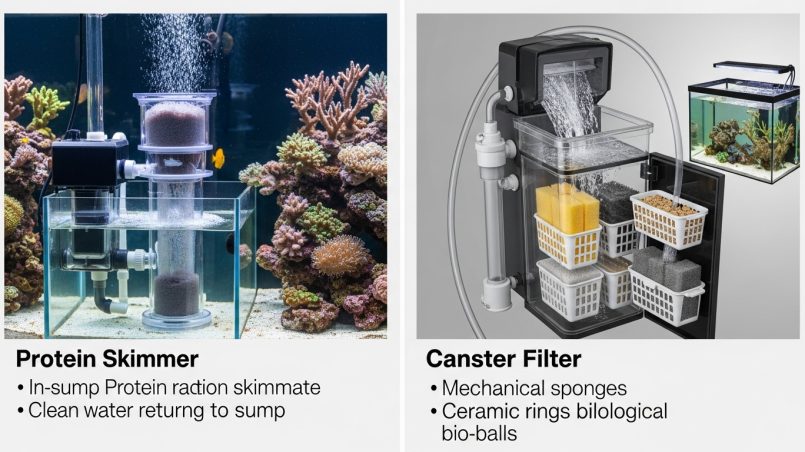
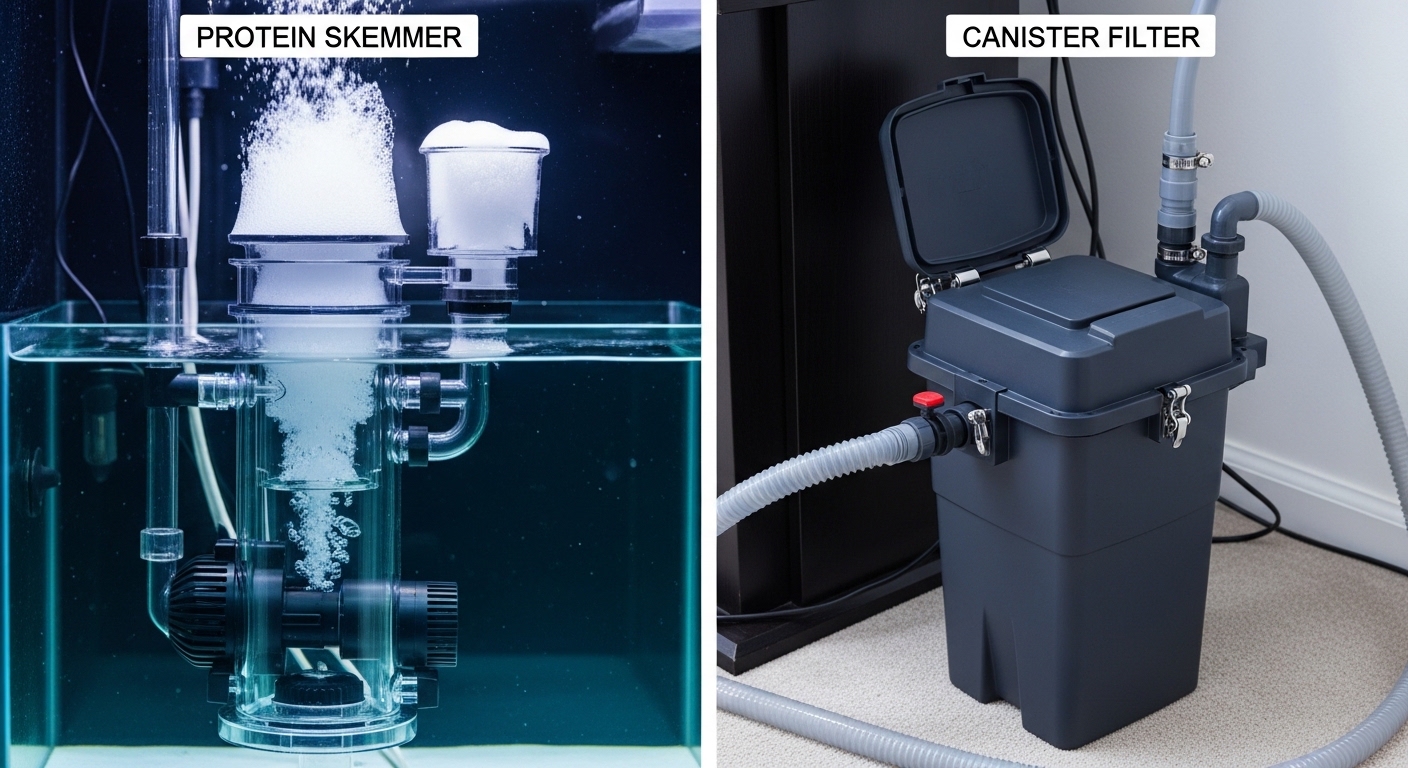
A protein skimmer is a filtration device used in saltwater tanks to remove organic waste before it breaks down. It works by forcing water and air bubbles through a chamber, attracting organic compounds that adhere to bubbles and are collected as foam.
Protein skimmers utilize the principle of foam fractionation. As microscopic air bubbles rise through the skimmer’s water column, hydrophobic (water-repelling) waste molecules attach themselves to bubble surfaces. These bubbles form a foam head, which is funneled into a collection cup for easy removal. This process eliminates dissolved organic compounds, proteins, and certain toxins before they degrade into harmful substances like ammonia and nitrate.
- Reduces organic waste
- Lowers nitrate and phosphate levels
- Improves oxygenation for tank inhabitants
What is a canister filter, and how does it work?
A canister filter is an external filtration system commonly used in aquariums. It forces tank water through various filter media, physically trapping debris and removing impurities, before returning clean water back to the tank.
Canister filters are sealed units placed below or beside the aquarium. Water is pumped from the tank into the canister, passes through mechanical, chemical, and biological filtration stages (using sponges, carbon, bio-media, etc.), then flows back up into the tank. These filters excel in mechanical removal of particles and support healthy bacteria colonies for biological filtration. They are versatile and work well for freshwater and some saltwater setups but require regular maintenance to prevent detritus buildup.
- Mechanical: Traps debris with sponges/pads
- Chemical: Removes toxins using activated carbon or resin
- Biological: Encourages beneficial bacteria growth
What are the main differences between protein skimmers and canister filters?
Protein skimmers and canister filters differ in both function and application. Skimmers remove dissolved organic waste using air bubbles and foam, while canister filters rely on mechanical, chemical, and biological media to clean water.
Protein skimmers excel at removing organic compounds before they decompose, while canister filters focus more on trapping solid particles and supporting nitrifying bacteria. Skimmers are generally best for saltwater and reef aquariums, whereas canisters can be used for both saltwater and freshwater setups. One limits nitrate buildup, the other maintains general clarity and supports fish load. Your choice impacts long-term water quality, maintenance needs, and tank health.
Which provides better water quality for reef tanks—skimmer or canister filter?
Protein skimmers generally provide superior water quality in reef tanks by removing organic waste before it can break down into harmful compounds. This directly benefits sensitive corals and invertebrates.
Reef tanks demand ultra-clean water to support diverse and delicate marine life. Protein skimmers are specifically designed for this, reducing dissolved organics, improving clarity, and boosting oxygenation. Canister filters handle basic cleaning and biological filtration, but they may become nutrient traps, leading to unwanted algae if not meticulously cleaned. When prioritizing pristine water and stable parameters, protein skimmers outshine canisters for most reef setups.
Are there any drawbacks to using just a protein skimmer?
While protein skimmers excel at removing organic wastes, they do not filter out fine particulates or perform mechanical and chemical filtration well. Your tank may still harbor dust, debris, or certain toxins.
Relying solely on a protein skimmer may leave your aquarium with visible particles, cloudiness, or substances like heavy metals. Skimmers do not replace mechanical sponges or carbon media; they solely target dissolved organics. For complete filtration, many reef keepers pair skimmers with other filter types or regular water changes, balancing both biological and mechanical needs.
How does maintenance differ between a protein skimmer and a canister filter?
Protein skimmers usually require less frequent maintenance, needing only periodic cleaning of the collection cup and occasional chamber rinsing. Canister filters, on the other hand, demand more regular attention to prevent waste buildup and potential nitrate spikes.
Canister filters must be disassembled, rinsed, and media replaced or cleaned—often every two to four weeks. Failing to do so allows trapped debris to decompose, polluting the tank. Protein skimmers’ main task is removing foam and rinsing parts, which is simpler and much quicker. For busy or beginner aquarists, the lower maintenance of skimmers is often attractive, especially in large or heavily stocked tanks.
Can I use both a protein skimmer and a canister filter in my reef tank?
Yes, combining a protein skimmer and a canister filter can provide comprehensive filtration, addressing organic waste removal, mechanical cleaning, and enhanced biological balance. This hybrid approach benefits larger or heavily stocked reef tanks.
Many advanced aquarists use both systems for best results. The skimmer handles dissolved organic compounds, while the canister filter takes care of visible particles and supports beneficial bacteria colonies. This reduces maintenance, as skimmers remove waste before it can clog the filter media in the canister. The combined result: cleaner water, happier fish and corals, and easier tank management.
- Ideal for high bioload or mixed reef systems
- Reduces frequency of major cleanings
- Covers all filtration bases for long-term success
When should you choose a canister filter over a protein skimmer?
A canister filter may be preferable for freshwater tanks, some fish-only saltwater aquariums, or where heavy mechanical and biological filtration is required—especially if a sump is not available for a skimmer.
Canister filters are perfect for planted freshwater tanks, cichlid setups, or marine environments with large, messy fish. They can be used in smaller saltwater tanks where adding a skimmer isn’t practical, or in cases where mechanical trapping of debris is critical. However, for coral-heavy reefs, a protein skimmer remains the gold standard for ultimate water quality.
PROTEIN SKIMMER VS CANISTER FILTER: Quick Comparison Table
| Feature | Protein Skimmer | Canister Filter |
|---|---|---|
| Primary Function | Removes dissolved organic waste | Mechanical, biological, and chemical filtration |
| Best For | Reef and saltwater tanks | Freshwater & some saltwater tanks |
| Maintenance Frequency | Low | High |
| Water Polishing | Good (for organics) | Excellent (for particles) |
| Removes Nitrates | Indirectly lowers | No, can accumulate if not cleaned |
| Installation | Requires sump or hang-on model | External, under-tank |
| Recommended For Corals | Yes | With extra caution |
| Cost | Moderate to high | Moderate |
What common problems are caused by choosing the wrong filter for your reef tank?
Selecting the wrong filter leads to water quality issues, nuisance algae outbreaks, stressed corals, and additional work. Canister filters, if neglected, can become nitrate and phosphate traps, while skipping a skimmer leaves dissolved waste unchecked.
Reef tanks without proper skimming often experience yellow water, decreased coral coloration, and more frequent algae blooms. Conversely, neglecting canister filter maintenance creates detritus buildup and spiking nitrates, which harm delicate reef inhabitants. The right combination ensures smoother operation and healthier marine ecosystems.
Conclusion: Should you choose a protein skimmer or a canister filter for your reef tank?
Both protein skimmers and canister filters have unique strengths—skimmers excel at keeping reef tanks crystal clear by eliminating dissolved organics, while canister filters efficiently remove visible debris. For most reef setups, especially those with corals and invertebrates, a protein skimmer offers the best long-term results and reduced maintenance. However, combining both delivers a thorough filtration system, particularly in high bioload aquariums.
Evaluate your tank’s inhabitants, size, and your available time for routine care. If you value pristine water and simplified cleaning, prioritize a protein skimmer. For freshwater or fish-only setups, a canister filter may suffice. Want flawless results? Use both! Ensure your filtration setup matches your reef’s unique needs—your corals will thank you.
Ready to upgrade your reef tank? Research your tank size, determine your bioload, and choose the perfect filter solution for your underwater world. Experience the difference pure, clean water makes for your thriving reef!
Frequently Asked Questions (FAQ)
Can I use a protein skimmer in a freshwater tank?
No. Protein skimmers are ineffective in freshwater systems. They rely on saltwater’s surface tension to create adequate foam. For freshwater tanks, a canister filter is a better filtration option.
Do I still need to change water if I use a protein skimmer?
Yes, regular water changes are essential even with a skimmer. While skimmers remove dissolved organics, they don’t replace the need to replenish essential elements or remove all waste.
How often should I clean my canister filter?
Clean canister filters every 2-4 weeks, depending on your tank’s bio-load and size. Neglecting cleaning leads to detritus accumulation, increased nitrates, and declining water quality.
Is a protein skimmer noisy?
Most modern protein skimmers are relatively quiet, though some models may produce a gentle humming or bubbling sound. Proper maintenance and installation minimize noise in most cases.
Can a canister filter be used with live rock?
Yes, but with caution. While canister filters support biological filtration, improper maintenance can cause detritus buildup. Always rinse filter media and monitor nitrate levels when using live rock and canisters together.
What size protein skimmer do I need for my reef tank?
Choose a protein skimmer rated for at least the total volume of your aquarium, preferably up to 1.5 times your tank size for best results—particularly in heavily stocked coral tanks.
Will using both filters make my reef tank maintenance-free?
No filtration system makes a reef tank completely maintenance-free. Using both a skimmer and canister filter reduces water quality issues, but routine cleaning, water changes, and parameter testing remain vital.
Read More Also: Budget Fishing Gear for Beginners: Smart Buying Tips
Find out: Try this kitchen layout if you love to host