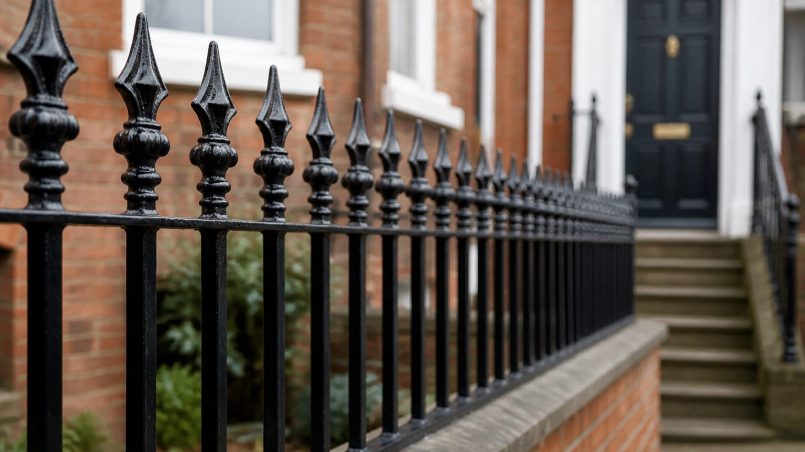
How Long Wrought Iron Railings Last
The length of time that new railings are likely to last before they need to be replaced will depend on how they are made, where they are to be situated and how much maintenance they are to receive.
Properly Made Ironwork Lasts Longest
Genuinely forged Wrought Iron Railings can last over a century if correctly maintained. Many examples of Victorian and Edwardian period railings can still be seen today. In contrast, cheap Mild Steel look alike railings are often imported from the Far East and can fail within 15-25 years due to the thin steel used and poor construction. When purchasing new railings it is essential that the vendor is able to advise on the composition of the bars used to form the design. A well made forged iron railing can last for decades, not years!
The Priming Makes The Difference
A proper coating job for a railing would involve hot-dip galvanising or a zinc-rich primer applied prior to the top coat. The surface of the metal will have a barrier that bonds to the surface of the metal, as opposed to just sitting on top of it and flaking off. If you were to apply a single coat of paint to bare metal, expect surface rust to appear within two to three years. When it comes to proper architectural ironwork for older properties that are to be restored, it’s wise to seek the advice of someone who is an expert in that field of ironwork. They will be able to advise on the most suitable finish for the existing ironwork and will make sure that the new coating does not trap moisture in the ironwork.
Coastal Locations Speed Up Rust
Even more important than the type of metal that your wrought iron railings are made from is the location where you intend to place them. Coastal locations subject to high salt levels in the air are typically the worst for corrosion. Wrought iron railings situated in locations within a mile or so of the sea can develop corrosion within a third of the time that railings located further inland would typically last. In a recent report, the National Physical Laboratory explored in detail how environmental conditions can influence the rate of corrosion of metal and how the combination of chlorides in the air with still, damp air is particularly problematic for coating degradation.
Rust Starts At The Base
Rust tends to form at the base of the railings where the metal sits on the ground or within a stone base. This area is prone to collecting rainwater and having soil or mulch piled against the metal. Water and soil against the metal from the ground causes the coating to be stripped from the inside out. Even though the paint on top may be flaking, the base of the railings can be severely pitted from beneath. Ensuring that soil and debris is cleared from the base of the railings and allowing water to drain away from the foot of the railings will increase the life of the railings.
Fixings Fail Before The Metal
Many old railings fail because the joints between the posts and the stone, brick etc., have deteriorated. As the railings are fixed into stone etc., with lead, mortar or resin, then the joints can start to fail before the ironwork itself. Water can penetrate into the cracks in old lime mortar, caused by frost and thaw cycles, and then, over time, cause the railings to become loose in their sockets. This type of deterioration is covered in the surveying standards for boundary features and is considered separately from the deterioration of the iron itself. A loose railing does not necessarily mean that all the iron has failed, only that the fixing has.
Repainting Schedule For Long Life
Even assuming you want to get close to the above century-plus life expectancy of Wrought Iron Railings, it is normal to repaint railings every 5 to 8 years, depending on exposure. It is a small price to pay and each new coat of paint will protect the previously applied coat(s) of paint and prevent moisture from penetrating to the bare metal below. Fifteen years of neglect can cost as much to put right as twice the cost of new railings of similar size and complexity to have been properly maintained throughout their lifespan.
Signs It Needs Replacing
Surface-level orange rust formation, and faded, chalky paint covering rusty metal, will generally require a re-paint of the ironwork. However, the signs that indicate the end of a railing’s lifespan are very different, for example: flexible ironwork that will bend in the middle under pressure, advanced rust growth that is starting to crack and split the paint around it, and very deep pitting that can be felt with a fingernail. The ironwork will need to be replaced, rather than simply re-painted. We can inform you whether planning permission is required for new railings, and if your property is in a conservation area, or if the original ironwork dates back to before the house was built.
Wrought Iron Versus The Alternatives
For example, aluminium railings are low-maintenance as they do not rust, and last for around 20-30 years. Galvanised steel railings can last for around 25-40 years with minimum maintenance. However, as with all coatings, the zinc coating on galvanised steel will wear thin at some point and once this has happened the steel will start to rust quickly. Properly maintained wrought iron can last for a lot longer than these alternatives, but this does depend on the correct maintenance being carried out, as described above.
Whatever you estimate for the lifespan of your railings, that is largely determined by the initial decisions and subsequent maintenance over the years, not by the choices you make when installing them.