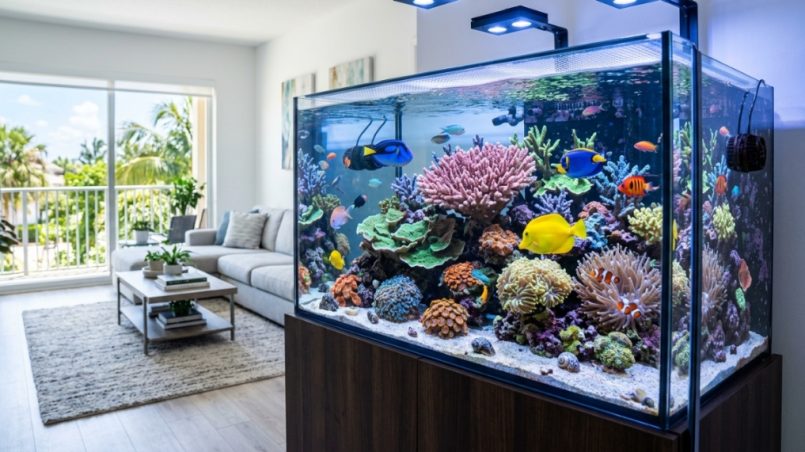
Living in the Sunshine State comes with a unique set of challenges for aquarium keepers. You might think that because Florida is warm, your tank is fine, but the reality is that indoor air conditioning and seasonal swings can cause dangerous temperature fluctuations. A stable environment is the lifeline of your aquatic ecosystem, and failing to maintain temperature Florida aquariums can lead to stressed fish, algae blooms, and costly losses. This guide walks you through proven strategies to keep your underwater world perfectly stable all year round.
Why is a Stable Temperature Critical for Florida Fish Tanks?
A stable temperature isn’t just about comfort; it’s about survival. Fish are ectothermic, meaning their body temperature matches their surroundings. Sudden shifts of even 2-3 degrees can weaken their immune systems rapidly.
In Florida, the challenge isn’t necessarily the cold—it’s the contrast between a 95°F afternoon and a 74°F air-conditioned living room. This constant yo-yo effect is more stressful than a steady, slightly elevated temperature. Stability prevents deadly metabolic spikes and keeps beneficial bacteria colonies thriving.
The Biological Impact of Temperature Swings
When temperatures fluctuate, your fish’s metabolism speeds up or slows down unexpectedly. This can cause rapid oxygen depletion, especially in warmer water, leading to gasping at the surface. Over time, chronic stress reduces their lifespan.
How Florida’s AC Wreaks Havoc
Central air conditioning is the #1 enemy of aquarium temperature stability. While you enjoy 72°F indoors, your heater works overtime to fight the cold air blowing across the tank surface. This constant cycling wears out equipment faster than normal.
The “Cold Snap” Phenomenon
Even in Florida, winter cold fronts drop outdoor temps significantly. If you have an attached garage or a room with poor insulation, the tank can lose heat rapidly overnight. A proactive approach is essential to mitigate these sudden drops.
What is the Ideal Temperature Range for Most Florida Aquariums?
For a tropical freshwater community tank, the sweet spot is between 76°F and 80°F. Saltwater reef tanks usually thrive at a slightly narrower range of 76°F to 78°F. Staying within these brackets prevents unnecessary stress.
However, “room temperature” in Florida varies widely. Using a thermometer is non-negotiable because your home’s ambient temperature rarely aligns with your tank’s needs. You need a dependable heater to achieve these numbers, not luck.
Freshwater Species Specifics
Discus fish prefer warmer waters near 82°F-84°F, while goldfish thrive at 68°F-72°F. Mixing species with different temperature requirements is a common beginner error that leads to illness.
Saltwater and Reef Invertebrates
Corals are exceptionally sensitive to heat. When temperatures exceed 81°F, they expel their zooxanthellae, resulting in bleaching. Maintaining a precise temperature is vital for the longevity of your reef ecosystem.
Why You Shouldn’t “Ride Out” the Seasons
Most Florida homes are climate-controlled, but seasonal changes affect how often the AC kicks on. A heater set to 78°F will handle the summer AC blasts, but your thermostat may conflict. Consistency is your ultimate goal.
How to Choose the Right Heater Size for Florida Tanks?
The general rule of thumb is to provide 3-5 watts of power per gallon of water. A 20-gallon tank requires a 75-100 watt heater, while a 55-gallon tank needs a 200-watt model. But in Florida, efficiency matters more than raw power.
Because your AC runs frequently, a slightly oversized heater with a good thermostat is beneficial. It allows the water to recover faster after a temperature dip. However, oversized heaters without accurate controls can cook your fish, so always choose quality.
Wattage Calculations and Efficiency
Calculate the tank volume, consider the room’s lowest recorded temperature, and add a safety margin. For example, if your living room hits 68°F in winter, you might bump up 25% more wattage than standard recommendations.
Submersible vs. Inline Heaters
Submersible heaters are placed directly inside the tank, while inline heaters are plumbed into your canister filter. Inline models are excellent for large tanks because they heat water evenly as it passes through, preventing hot spots.
The Importance of a Built-in Thermostat
A built-in thermostat is your safeguard against overheating. Modern heaters use a bimetallic strip or digital controller to maintain precision. Look for models with a “set and forget” feature to ensure consistency.
When Should You Adjust the Temperature in Florida?
You should only adjust the temperature when introducing new fish, treating ich, or breeding. Otherwise, leave the dial at one consistent set point. Constantly adjusting it based on the weather creates chaos.
In Florida, external seasonal shifts do not require you to replicate nature. The Amazon basin doesn’t have air conditioning, so your tank shouldn’t mimic a “winter” that never truly happens indoors. Keep it steady.
During Medication and Quarantine
Many ich treatments require a temperature increase to 82°F-86°F. However, raise this heat gradually—no more than 1°F per hour—to avoid shocking the fish. Monitor oxygen levels closely, as warmer water holds less dissolved oxygen.
Avoiding “Baking” in the Summer
If your tank receives direct afternoon sunlight, the water can overheat even with the AC on. In this case, you might need to use a cooling fan, not a heater. Understand that you are both heating and cooling, depending on the room.
The Emergency “Cold Front” Protocol
When a freak Florida cold snap happens, wrap the tank in a blanket (do not cover the top!) and reduce water surface agitation temporarily. This helps retain heat until your primary heater catches up.
Which Tools Help Monitor Temperature Fluctuations?
You need a two-pronged approach: a primary heater and a backup thermometer. Digital probe thermometers are more accurate than stick-on liquid crystal strips. This ensures you catch malfunctions early.
Consider a controller that separates the heating and monitoring functions. This provides a safety net: if the heater sticks in the “on” position, the controller will shut off power before your tank boils like a pot of pasta.
Digital Thermometers vs. Traditional Glass
Digital units are faster and easier to read. They often have a probe that sits outside the tank, reading the water temp through the glass. Traditional glass ones are cheaper but often go out of calibration.
Using a Wi-Fi Smart Plug
A Wi-Fi smart plug allows you to monitor water temperature remotely and set alerts. If the temp drops below 74°F, you get a notification on your phone. This is a lifesaver for your maintain temperature Florida aquariums strategy while you’re at work.
Why Backup Systems Matter
Cheap heaters fail. They either stick on or stick off. Having a second, unplugged heater as a standby is a wise investment. In Florida, the lack of a “cool down” period means malfunctions are more noticeable and detrimental.
Can a Chiller Be Necessary for Florida Aquariums?
Yes, in specific scenarios. If you keep cold-water species (like axolotls) or high-tech planted tanks with intense lighting, ambient heat may overpower your heater. A chiller actively removes heat, bringing the water back to target.
However, chillers are expensive and energy-hungry. For most community tanks, a fan positioned across the water surface can lower temps by 3-5°F via evaporative cooling. This is often sufficient for Florida summers.
Evaporative Cooling Fans
Clip-on fans are cheap and effective. They blow across the top, speeding up evaporation. You must top off the water daily, but this method is highly effective at preventing the “greenhouse” effect inside your tank.
The Cost of Inefficiency
Using a chiller adds significant electricity costs to your electric bill. If you can avoid it by relocating the tank away from windows or heat vents, you’ll save money. Analyze your room’s heat sources first.
Reef Tanks and Heat Management
Reef tanks with metal halide lights need chillers or fans. If you see your temperature barreling toward 82°F, immediate action is required. Fan-based cooling is the first line of defense.
How to Set Up a Multi-Zone Heating System?
Large tanks often need two smaller heaters instead of one large one. Placing them at opposite ends ensures even heat distribution. This prevents the “hot side” and “cold side” phenomenon.
Connect both heaters to a single digital controller for unified management. This setup also provides redundancy—if one fails, the other still functions, giving you time to replace it without a disaster.
Placement: Near the Filter Output
Position the heater horizontally near the filter’s return flow. This disperses warm water evenly. Placing it near the substrate can damage your substrate or burn the glass if left exposed.
Programming for Consistency
Digital controllers allow you to set a specific tolerance, like 0.5°F. The controller will switch the heater on and off to maintain that exact number, eliminating the slow drift that causes issues.
Reverse Osmosis and Temperature
When doing water changes, ensure the new RO/DI water is the same temperature as the tank. A 10-degree difference can shock invertebrates. Heat the water in a bucket before adding it.
The Role of Water Flow in Temperature Stability
Stagnant water has thermal stratification—warm water rises, cool water sinks. A wavemaker or circulation pump mixes the water, making the temperature uniform throughout the tank. This is crucial for eliminating cold dead zones.
In planted tanks, constant flow also prevents fungal growth and distributes nutrients. Without circulation, your heater may run longer because the sensor is only reading the warm water trapped at the top.
Surface Agitation and Evaporation
Surface agitation promotes gas exchange and heat loss. If your tank is running hot, increase agitation. If your tank is running cold, decrease the surface ripples to retain more heat.
Powerhead Utilization
Aim your powerhead toward the heater to create a convection current. This ensures the heater sensor sees a realistic average temperature, not the localized hot spot directly adjacent to the heating element.
Avoiding Dead Spots
“Dead spots” are areas where water hardly moves. These spots can be 2-3 degrees colder than the rest. Rearrange rocks and driftwood to eliminate stagnant pockets where fish may hide and get cold.
Why Regular Heater Maintenance is Essential?
Calcium deposits and mineral scaling insulate the heating element, causing it to work harder and often overheat. Monthly cleaning prevents this decrease in efficiency. Unplug and gently scrub the glass or metal core.
Check the O-rings and suction cups. A heater that detaches and falls onto the gravel can crack due to thermal shock. Regular inspection extends the lifespan of your equipment significantly.
Maintaining stable water parameters goes hand in hand with temperature control. Once you have your cooling and heating systems properly configured to combat the warm Florida climate, your next priority should be selecting the right foundation for your marine life. Be sure to pick the best reef salt for healthy home aquariums to ensure your corals and fish receive essential trace elements and stable salinity levels.
The Cleaning Process
Use a soft plastic scrubber—never a metal blade—to remove calcium. For stubborn deposits, soak the heater in a 1:1 vinegar-water solution for 15 minutes. Rinse thoroughly before reinstallation.
Signs of Wear and Tear
Inspect the power cord for cracks. Look for bubbles inside the glass tube, which indicate a failed seal. Replace the heater immediately if you see these signs to prevent electrical hazards.
Scheduled Replacement Timeframe
Even good heaters last only 3-5 years. Mark your calendar to replace them preemptively. It is better to proactively replace a $50 heater than to lose a $500 fish collection to a malfunction.
How to Troubleshoot Constant Temperature Drift?
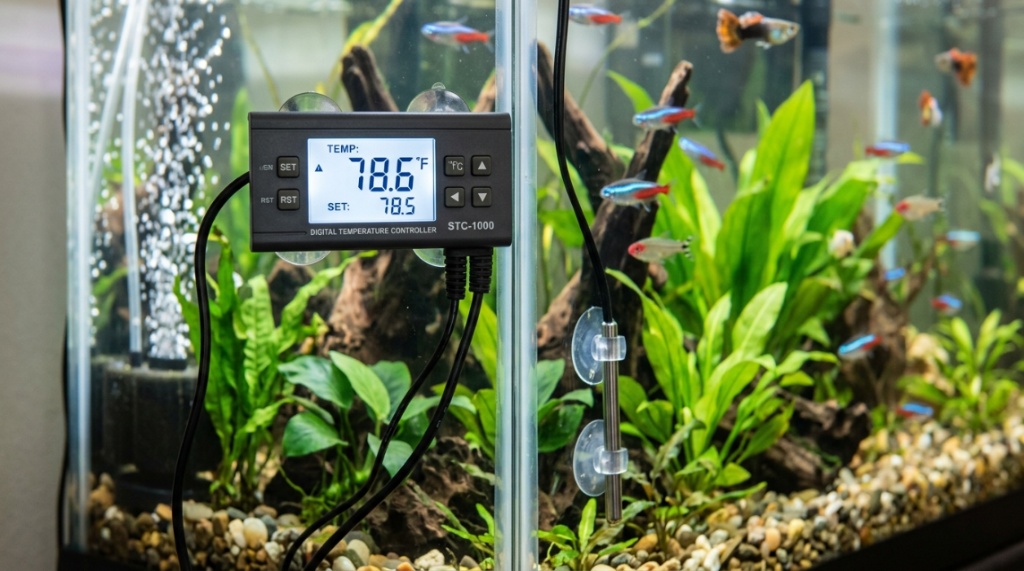
If your heater runs 24/7 but the tank stays cold, your heater is undersized. If the tank is too hot and the heater shuts off, your room temperature is too high, or you need a chiller. Check the basics first.
Unplug the heater and place it in a bucket of known temperature water. Plug it in and watch the cycle time. If it takes more than 30 minutes to raise the temp by 2 degrees, it’s likely failing.
Calibrating Your Thermometer
Test your thermometer against a glass of ice water (32°F). Adjust for any offset or buy a new one. If your display is off by 2 degrees, you may be chasing a problem that doesn’t exist.
Environmental Heat Sources
Check for nearby electronics, sunlight, and air vents. A power supply under the tank emits significant heat. Relocate these items or the tank itself to prevent erratic fluctuations.
Controller Malfunctions
Sometimes the sensor probe falls out of the water or gets stuck in a cold spot. Ensure the probe is positioned in the middle of the water column, unaffected by external ambient air.
Best Practices for Nighttime Temperature Drops
At night, switch off your aquarium lights; this removes a significant heat source. In Florida, nighttime temps can drop rapidly, but usually, your AC also turns off, meaning the room warms slightly. Monitor this balance.
Use a timer for your lights that also accounts for seasonal sunset changes. Maintaining a regular photoperiod helps stabilize the tank’s internal climate.
If you are looking for reliable equipment without breaking the bank, a crucial part of your plan to maintain temperature Florida aquariums involves investing in a high-quality, affordable heater. Your fish depend on you to keep their environment stable, so take action today—check your current setup, verify your heater’s functionality, and make the necessary adjustments for a healthier tank.
Using a Ceramic Heat Emitter
In extremely drafty rooms, a low-wattage ceramic heat emitter mounted near the tank can raise ambient room temperature by a few degrees, reducing the strain on your aquarium heater.
Insulating the Back Glass
Placing polystyrene insulation foam behind the tank blocks drafts and loses radiant heat. This is a low-cost hack that stabilizes temperature and reduces electricity waste.
Monitoring Daily Cycles
Keep a log of morning vs. evening temperatures. A continuous drift of 1 degree is fine, but a 5-degree swing means your setup needs adjustment. Consistency matters more than the actual number.
Frequently Asked Questions
What temperature should a Florida aquarium be?
Most tropical fish require 76°F-80°F. The goal is to maintain a stable temperature within this range, avoiding swings caused by air conditioning.
Can I turn off my aquarium heater in Florida?
No. Air conditioning keeps indoor temps low enough to stress fish. A heater ensures stability, especially when doors open and the 90°F heat blasts in.
How do I lower the temperature in my aquarium?
Use a clip-on fan for evaporative cooling, move the tank away from sunlight, and reduce tank light intensity. Avoid drastic changes; lower slowly.
How often should I clean my aquarium heater?
Clean your heater once a month to remove calcium and mineral buildup, which reduces efficiency and heating capacity.
Is 82°F too hot for a reef tank?
Yes, prolonged periods above 81°F cause coral bleaching. Use a fan or chiller to bring the temperature down to 78°F-79°F.
What is a TCO heater?
TCO stands for Thermal Cut-Off, a safety mechanism that shuts down the heater if it overheats, preventing fires or a “cooked” tank.
Do I need a thermometer if I have a heater?
Absolutely. Heaters can malfunction. A reliable thermometer is your first warning sign of failure, giving you time to intervene.
Stabilizing your tank’s temperature doesn’t have to be a full-time job, but it does demand attention. By choosing the right wattage, using smart monitoring tools, and understanding Florida’s unique climate quirks, you’ll provide a stable sanctuary for your aquatic pets. Don’t just rely on guesswork; effective temperature management is the difference between a thriving ecosystem and a disaster waiting to happen.