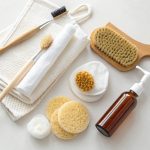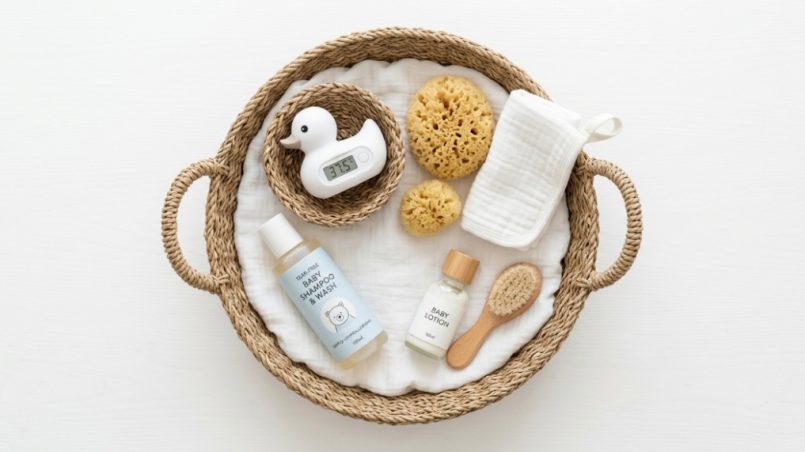
Warm water disappears from newborn skin faster than most parents realize, which is why a safe newborn bathing routine matters more than buying expensive baby gear. Many first-time parents unknowingly use harsh soaps, oversized tubs, or adult towels that disrupt delicate infant skin barriers within days. Building the right setup with gentle infant hygiene products, safe bathing tools, and smart baby shampoo tips helps prevent dryness, irritation, and unnecessary stress during bath time.
What Are Newborn Bath Essentials Every Parent Should Prepare?
Newborn bath essentials are the safe, skin-friendly products and tools needed to clean, protect, and comfort a baby during bath time. These essentials include a baby bathtub, mild cleanser, soft towels, washcloths, fragrance-free moisturizer, and safe infant hygiene products.
Bathing a newborn is not just about cleanliness. It supports skin health, comfort, bonding, and sleep routines. According to pediatric guidance from organizations like the American Academy of Pediatrics, newborns only need a few baths weekly during early months because excessive bathing may dry sensitive skin.
Most first-time parents overbuy products that are unnecessary. Instead of filling cabinets with trendy baby items, focus on essentials that improve safety and simplify your newborn bathing routine.
- Gentle baby cleanser
- Soft hooded towel
- Infant bathtub with support
- Fragrance-free baby lotion
- Soft washcloths
- Rinse cup
- Baby-safe thermometer
- Clean diapers and fresh clothing nearby
Why Is A Proper Newborn Bathing Routine Important?
A proper newborn bathing routine protects delicate skin, reduces irritation, and creates a calming experience for both baby and parent. Consistency also helps babies feel secure and relaxed.
Newborn skin is nearly 30% thinner than adult skin. That means moisture escapes faster and irritation develops more easily. Overheating water, strong fragrances, and rough fabrics can trigger dryness or redness quickly.
Bathing routines also become emotional routines. Parents often notice babies sleep better after a warm evening bath paired with feeding and swaddling.
Benefits of a structured newborn bathing routine include:
- Supports healthy skin barrier function
- Helps remove milk residue and sweat
- Creates predictable bedtime cues
- Encourages parent-baby bonding
- Reduces risk of diaper-area irritation
- Improves comfort during warm weather
How Often Should You Bathe A Newborn?
Most newborns only need two to three baths weekly during the first months. Daily baths are unnecessary unless there is excessive spit-up, sweating, or diaper leakage.
Between baths, parents can clean the baby’s face, neck folds, hands, and diaper area using soft cotton cloths and lukewarm water.
Which Infant Hygiene Products Are Actually Necessary?
The best infant hygiene products are simple, fragrance-free, dermatologist-tested, and designed for sensitive newborn skin. Fewer ingredients often mean lower irritation risk.
Marketing can overwhelm new parents with dozens of baby skincare options. In reality, only a few products are truly useful.
| Product | Purpose | What To Look For |
|---|---|---|
| Baby Cleanser | Gentle skin cleaning | Soap-free, tear-free, fragrance-free |
| Baby Shampoo | Scalp cleansing | pH-balanced, hypoallergenic |
| Baby Lotion | Prevent dryness | Ceramides or natural moisturizers |
| Diaper Cream | Protect skin barrier | Zinc oxide formula |
| Soft Washcloths | Gentle cleaning | Cotton or bamboo material |
| Baby Tub | Safe positioning | Non-slip support |
Products with heavy perfumes, alcohol, parabens, or strong dyes are better avoided during newborn months.
Do Newborns Need Separate Shampoo And Body Wash?
No, many pediatricians recommend gentle 2-in-1 cleansers during the newborn stage because they simplify bath routines and reduce ingredient exposure.
However, babies with cradle cap or sensitive skin may benefit from separate products specifically designed for scalp care.
What Baby Shampoo Tips Should First-Time Parents Follow?
The safest baby shampoo tips include using tiny amounts, rinsing thoroughly, avoiding fragrances, and washing hair only when necessary. Less product is usually better for newborns.
Parents often assume more bubbles equal better cleaning. Newborn skin works differently. Excess cleanser strips natural oils that protect delicate skin barriers.
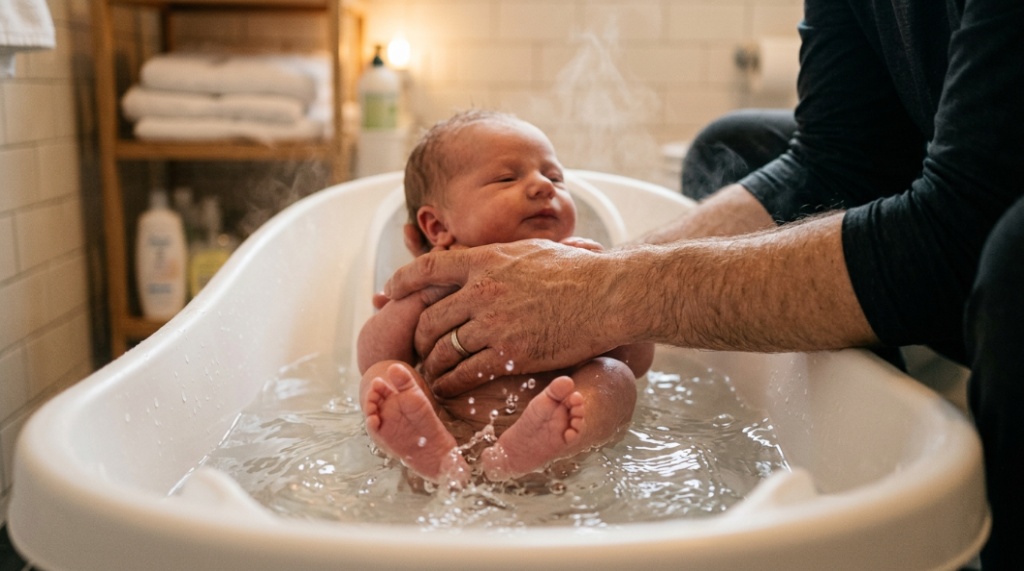
Best Baby Shampoo Tips For Sensitive Skin
- Use lukewarm water only
- Apply shampoo using fingertips, not nails
- Choose fragrance-free formulas
- Avoid daily hair washing
- Rinse thoroughly around neck folds
- Pat dry instead of rubbing
- Watch for redness after first use
Babies with eczema or dry skin may react to botanical oils or essential oils marketed as “natural.” Natural ingredients are not automatically safer for newborns.
How Much Shampoo Should You Use On A Newborn?
A pea-sized amount is usually enough for newborn hair and scalp cleaning. Newborns produce very little oil compared to older children.
Using too much cleanser increases the chance of residue buildup and dryness.
What Is The Safest Baby Bathtub For Newborns?
The safest baby bathtub supports the baby’s neck, prevents slipping, and fits securely on stable surfaces. Ergonomic infant tubs reduce handling stress for new parents.
Kitchen sinks were once common bathing spaces, but modern infant tubs provide better positioning and temperature control.
Features to prioritize:
- Non-slip base
- Newborn sling support
- Easy drainage
- BPA-free materials
- Compact storage design
- Stable structure
Should You Use A Bath Thermometer?
Yes, especially for first-time parents. Ideal newborn bath water stays around 37°C to 38°C (98.6°F to 100.4°F).
Water that feels comfortable to adults may still be too hot for infant skin.
How Can Parents Create A Stress-Free Newborn Bathing Routine?
A stress-free newborn bathing routine starts with preparation before water touches the baby. Organizing essentials nearby prevents panic and improves safety.
New parents often struggle because they try managing towels, soap, clothing, and diapers during the bath itself.
Simple Step-By-Step Newborn Bathing Routine
- Prepare towels, clean clothes, and diaper first
- Fill tub with shallow lukewarm water
- Support baby’s head and neck securely
- Clean face first using plain water
- Wash body gently from top downward
- Rinse carefully around folds
- Lift baby immediately into towel
- Pat dry thoroughly
- Apply moisturizer if needed
- Dress baby quickly to retain warmth
Keeping bath time under 10 minutes helps prevent skin dryness and temperature loss.
What Time Is Best For Newborn Baths?
Evening baths often work best because warm water can calm babies before sleep. However, the best time is whenever parents feel relaxed and unhurried.
A rushed bath usually creates more crying and stress.
What Mistakes Should First-Time Parents Avoid During Bath Time?
Common newborn bath mistakes include overheating water, using adult products, overbathing, and leaving babies unattended for even a second.
Many first-time parents unintentionally focus more on cleanliness than comfort and safety.
Most Common Newborn Bathing Mistakes
- Using strongly scented soaps
- Bathing daily unnecessarily
- Skipping moisturizer on dry skin
- Pouring water directly over face
- Using rough towels
- Leaving supplies out of reach
- Using deep bath water
- Ignoring skin irritation signs
Even shallow water presents drowning risk. Babies should never be left unattended during bath time.
Which Towels And Washcloths Work Best For Newborn Skin?
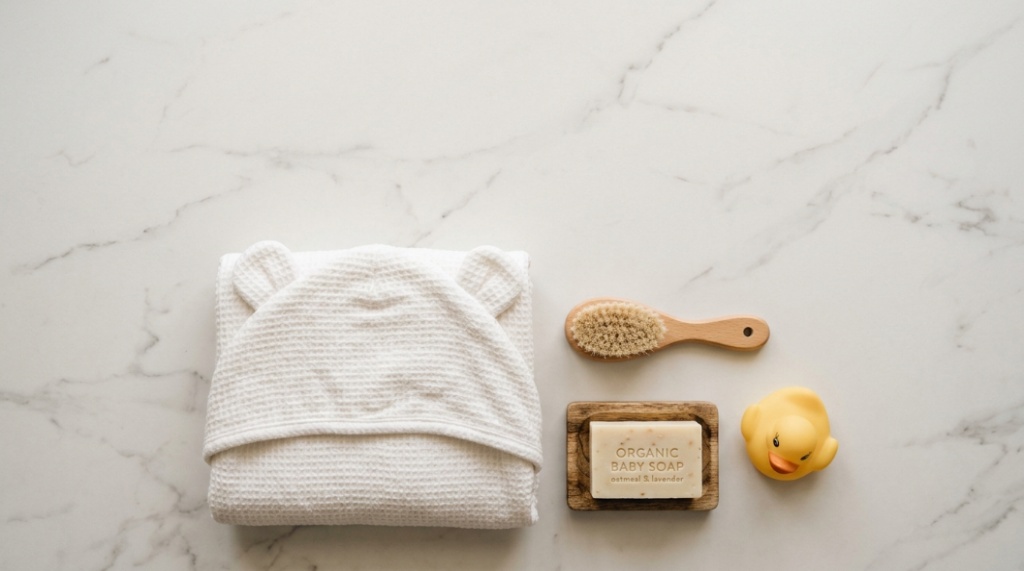
Soft cotton or bamboo towels and washcloths work best because they reduce friction on delicate newborn skin. Hooded towels also help maintain body warmth.
Texture matters more than appearance. Decorative towels may feel rough after repeated washing.
What Fabric Is Best For Infant Hygiene Products?
Organic cotton and bamboo blends are popular because they remain soft and absorbent. Parents should wash all bath fabrics using fragrance-free detergent before first use.
Fabric softeners may irritate sensitive newborn skin.
How Do You Handle Cradle Cap During Newborn Baths?
Cradle cap usually improves with gentle scalp washing and light brushing. Most cases are harmless and temporary.
Cradle cap appears as flaky or greasy patches on the scalp. It does not usually bother the baby.
Safe Cradle Cap Care Tips
- Massage scalp gently before bath
- Use mild baby shampoo
- Brush flakes softly using baby brush
- Avoid peeling flakes forcefully
- Consult pediatrician for severe irritation
Persistent redness, swelling, or fluid leakage should be evaluated by a healthcare professional.
Are Natural Or Organic Infant Hygiene Products Better?
Not always. Safe infant hygiene products depend more on formulation quality and irritant avoidance than trendy marketing labels.
Some organic products contain essential oils or plant extracts that trigger allergic reactions in sensitive babies.
Instead of focusing only on labels like “natural” or “organic,” parents should prioritize:
- Hypoallergenic testing
- Dermatologist recommendations
- Minimal ingredient lists
- Fragrance-free formulas
- pH-balanced cleansers
What Ingredients Should Parents Avoid?
Parents should avoid products containing sulfates, parabens, artificial fragrance, alcohol, and harsh antibacterial agents during newborn stages.
Sensitive skin reacts quickly to aggressive cleansing ingredients.
How Can Bath Time Support Parent-Baby Bonding?
Bath time supports bonding through touch, eye contact, voice interaction, and predictable comfort routines. Calm routines help babies feel emotionally secure.
Skin-to-skin contact and soothing voices during baths encourage attachment development. Babies recognize familiar voices and comforting patterns early.
Simple bonding ideas include:
- Talking softly during baths
- Maintaining eye contact
- Singing calming lullabies
- Using slow gentle movements
- Keeping lighting soft
Many parents eventually discover bath time becomes less about cleaning and more about connection.
Conclusion: What Truly Matters In A Newborn Bath Routine?
The best newborn bath setup is not the most expensive one. It is the safest, simplest, and gentlest routine that protects delicate skin while helping parents feel confident. A successful newborn bathing routine focuses on warmth, preparation, skin protection, and consistency rather than excessive products.
Choosing fragrance-free infant hygiene products, following smart baby shampoo tips, and keeping bath sessions short can significantly reduce irritation and stress. First-time parents often feel overwhelmed by endless recommendations online, but newborn care becomes much easier when routines stay simple and intentional.
Start with essentials. Watch how your baby’s skin responds. Adjust gradually. Over time, bath time becomes one of the most comforting and memorable parts of early parenting.
If you are preparing for your first baby this year, use this guide as a practical checklist and foundation for building a calm, safe, and confident bathing routine from day one.
Frequently Asked Questions About Newborn Bath Essentials
How many times should a newborn bathe weekly?
Most newborns only need two to three baths weekly because excessive bathing may dry sensitive skin. Daily cleaning of the diaper area, face, and neck folds is usually enough.
Can you use regular soap on newborn skin?
No, adult soaps are often too harsh for newborn skin. Parents should use mild, fragrance-free infant hygiene products specifically designed for babies.
What water temperature is safest for newborn baths?
The safest newborn bath temperature is around 37°C to 38°C (98.6°F to 100.4°F). Lukewarm water prevents overheating and protects delicate skin.
When can babies start using larger bathtubs?
Babies usually transition to larger tubs once they gain better head and neck control, often around 4 to 6 months old.
Should newborns use lotion after every bath?
Not always. Babies with dry or sensitive skin may benefit from fragrance-free moisturizer after baths, while others may not need daily lotion.
Are tear-free shampoos completely irritation-free?
No, tear-free formulas reduce eye irritation but may still irritate sensitive skin depending on ingredients. Parents should monitor skin reactions carefully.
What is the biggest newborn bath safety rule?
Never leave a newborn unattended near water, even for a few seconds. Always keep towels and supplies within arm’s reach before starting the bath.
📌 Related Reads
Discover: How to Choose Between 20”, 24”, and 26” Mountain Bikes
Explore: How to Follow a Golf Putter Buying Guide for the Right Choice