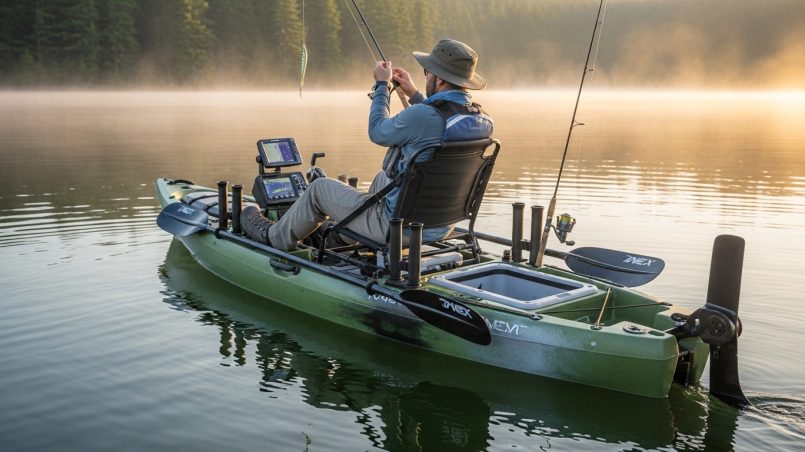
Pedal drive fishing kayaks changed how anglers fish from small watercraft. Instead of stopping to paddle every few seconds, you move forward using your legs while your hands stay free to cast, adjust tackle, or control fish. This improves efficiency, stability, and catch opportunities. But choosing the right pedal drive fishing kayak is not simple. Weight capacity, drive system type, hull design, seating comfort, storage layout, and transport needs all affect performance on the water.
This guide explains how to choose the right pedal drive fishing kayak using real selection criteria anglers use today. You’ll learn what matters before buying, how propulsion systems differ, and which features actually improve fishing results. Whether you fish lakes, rivers, or coastal water, this step-by-step breakdown helps you make a practical decision based on real usage—not marketing claims.
What is a pedal drive fishing kayak and why do anglers prefer it?
Short answer: A pedal drive fishing kayak uses a foot-powered propulsion system so anglers can move hands-free while fishing.
A traditional paddle kayak requires stopping your cast to reposition the boat. A pedal drive fishing kayak removes that limitation. Your legs control movement. Your hands stay ready.
This matters because movement control affects catch rate. According to observational angler surveys published by kayak fishing communities such as Kayak Angler Magazine, anglers using pedal propulsion maintain lure presentation longer and adjust position faster during drift conditions.
Benefits include:
- Hands-free casting and lure control
- Better tracking in wind
- Improved trolling performance
- Reduced upper-body fatigue
- Faster repositioning around structure
For anglers targeting bass, redfish, or pike near cover, these advantages are measurable during long sessions.
How does a pedal drive fishing kayak work?
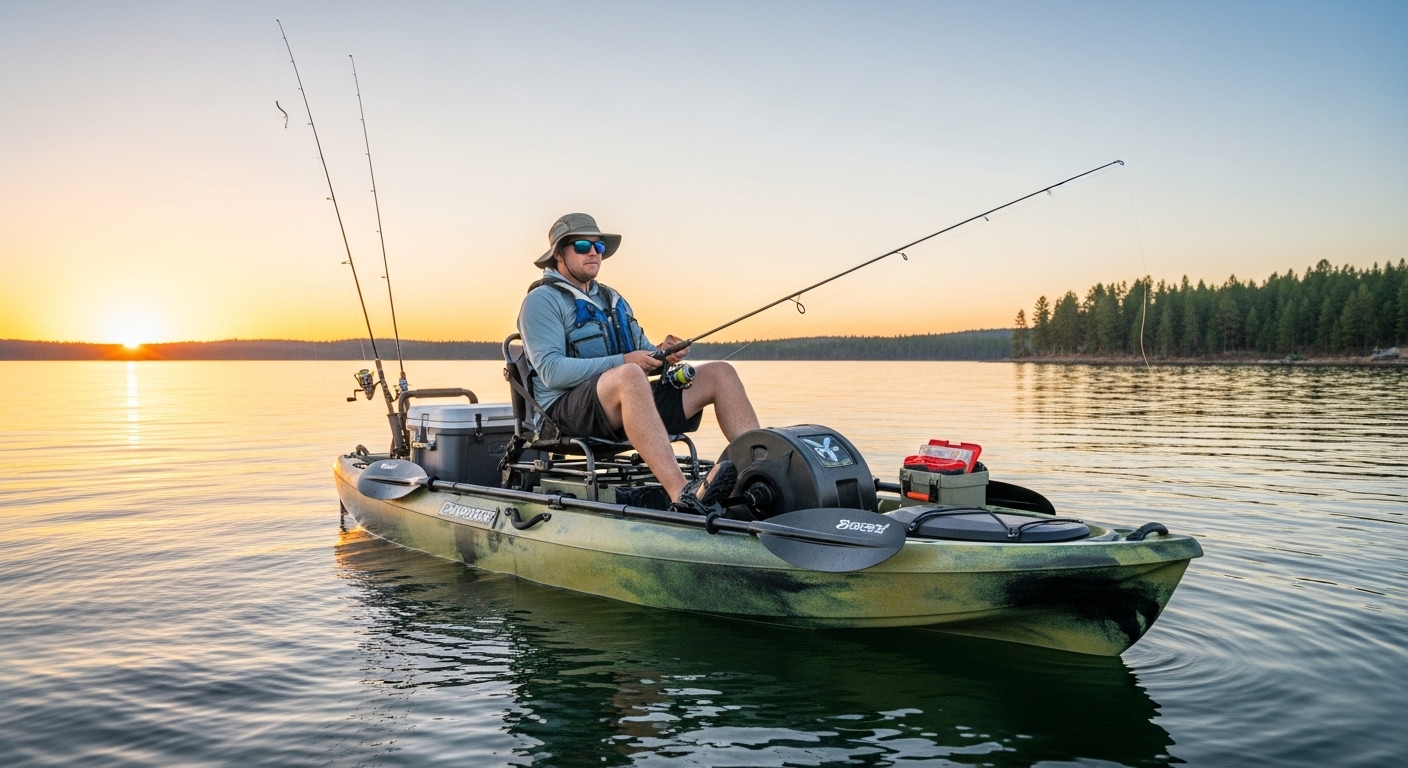
Short answer: A pedal system converts leg motion into underwater propulsion using either rotating fins or propellers.
Two primary propulsion styles dominate the market:
Propeller pedal drives
These systems function like a bicycle drivetrain connected to an underwater propeller.
- Higher speed potential
- Better performance in deep water
- Strong tracking in current
- Reverse capability in many models
Fin-style pedal drives
These systems mimic fish movement using oscillating fins.
- Operate in shallow water
- Efficient for slow stealth approach
- Less weed entanglement risk
- Common in sight-fishing scenarios
Choosing between them depends mostly on where you fish.
Why should you choose a pedal drive fishing kayak instead of a paddle kayak?
Short answer: Pedal kayaks increase casting time, reduce fatigue, and improve boat positioning accuracy.
A paddle kayak works well for short trips. But long sessions expose its limitations.
| Feature | Pedal Drive Kayak | Paddle Kayak |
|---|---|---|
| Hands-free fishing | Yes | No |
| Speed consistency | High | Moderate |
| Fatigue level | Lower | Higher |
| Trolling efficiency | Excellent | Limited |
| Wind correction | Easy | Manual effort required |
Anglers covering large reservoirs benefit most from pedal propulsion.
What size pedal drive fishing kayak should you choose?
Short answer: Most anglers need a kayak between 11.5 and 13 feet for stability and storage balance.
Length affects speed. Width affects stability.
- 10–11 ft: Compact but limited storage
- 11.5–12.5 ft: Best all-around choice
- 13+ ft: Maximum stability and gear capacity
Heavier anglers or those carrying electronics should prioritize wider hull platforms.
How important is stability in a pedal drive fishing kayak?
Short answer: Stability determines whether you can stand safely while casting or landing fish.
Standing increases casting accuracy. It also improves visibility in shallow water.
Modern pedal drive kayaks often exceed 34 inches in width to support standing anglers.
Flat-bottom hulls provide primary stability. Pontoon-style hulls provide secondary stability.
If you plan to sight-fish or flip jigs around cover, prioritize a wide standing platform.
What weight capacity should a pedal drive fishing kayak support?
Short answer: Choose a kayak rated at least 125 lbs above your total load.
Total load includes:
- Your body weight
- Tackle crates
- Battery systems
- Fish finder
- Anchor gear
- Cooler or storage box
Example case study:
A Texas freshwater angler documented reduced tracking efficiency after exceeding 90% of his kayak’s rated capacity during a multi-day bass trip. After switching to a higher-capacity hull, drift control improved and pedaling efficiency increased.
Which pedal drive system is better for shallow water fishing?
Short answer: Fin-drive systems perform better in shallow environments.
Shallow water anglers frequently encounter:
- Sand flats
- Vegetation beds
- Submerged logs
Fin drives move parallel to the hull. Propellers extend downward.
This difference reduces bottom strikes.
How comfortable should the seat be on a pedal drive fishing kayak?
Short answer: Choose an elevated adjustable seat with lumbar support for sessions longer than two hours.
Seat comfort directly affects endurance.
Look for:
- Mesh airflow design
- Adjustable height settings
- Back support frame
- Quick-dry materials
Anglers fishing tournaments often remain seated for 6–8 hours. Seat design matters more than speed for long sessions.
How much storage space do you need in a pedal drive fishing kayak?
Short answer: At minimum, choose a kayak supporting one crate system and two rod holders.
Essential storage zones include:
- Rear tankwell
- Bow hatch
- Side tackle trays
- Accessory rails
Accessory rails allow mounting:
- Fish finders
- Rod holders
- Camera mounts
- GPS units
How does hull design affect pedal drive kayak performance?
Short answer: Wider hulls improve stability, while longer hulls improve speed and tracking.
Common hull shapes include:
- Pontoon hulls for standing stability
- V-shaped hulls for speed
- Hybrid hulls for balanced performance
If your fishing style includes trolling or long-distance travel, choose a longer hull.
Are pedal drive fishing kayaks difficult to transport?
Short answer: Most weigh between 80 and 120 lbs and require a cart or vehicle rack.
Transport planning prevents frustration after purchase.
Options include:
- Kayak carts
- Roof rack loading systems
- Pickup bed transport
- Trailer setups
Some anglers underestimate transport difficulty. Plan ahead before buying.
What accessories improve a pedal drive fishing kayak setup?
Short answer: Electronics, anchor systems, and crate storage upgrades improve efficiency.
Popular upgrades include:
- Fish finder units
- Anchor trolley systems
- Rod holder extensions
- Standing assist straps
- Safety flag poles
Accessory compatibility should influence kayak selection.
How much should you budget for a pedal drive fishing kayak?
Short answer: Most reliable pedal drive fishing kayaks cost between $1,200 and $3,500.
Price varies based on:
- Drive system engineering
- Seat quality
- Hull material
- Storage configuration
- Accessory compatibility
Entry-level models support casual anglers. Tournament-ready models include advanced rigging layouts.
Which features matter most when choosing a pedal drive fishing kayak?
Short answer: Prioritize stability, propulsion reliability, storage layout, and seat comfort first.
Selection checklist:
- Hull width above 34 inches
- Weight capacity margin above 125 lbs
- Reverse pedal function
- Accessory rail compatibility
- Elevated adjustable seat
- Transport feasibility
Ignoring these factors leads to upgrade costs later.
Conclusion: Is a pedal drive fishing kayak worth buying?
A pedal drive fishing kayak improves control, endurance, and casting efficiency during real fishing conditions. It allows anglers to stay positioned longer near structure, respond faster to drifting wind, and maintain lure presentation without interruption.
If your goal is longer fishing sessions with fewer repositioning breaks, the upgrade makes practical sense. But the best results come from choosing the right hull size, propulsion system, and storage layout for your water conditions.
Before purchasing, compare stability ratings, seat quality, and transport requirements carefully. Then choose a kayak that supports your fishing style—not just your budget.
Next step: Create a checklist from the features above and compare three models within your target price range before making a final decision.
FAQ: Pedal Drive Fishing Kayak Buying Questions Answered
Are pedal drive fishing kayaks faster than paddle kayaks?
Yes. Most anglers maintain higher sustained speeds using leg-powered propulsion compared to paddle strokes.
Can pedal drive kayaks go in shallow water?
Yes. Fin-drive systems operate better in shallow water than propeller systems.
Do pedal drive fishing kayaks require maintenance?
Yes. Rinse the drive unit after saltwater use and inspect moving components regularly.
Are pedal kayaks suitable for beginners?
Yes. Many beginners find them easier to control because propulsion is continuous and stable.
Can you stand while fishing on a pedal drive kayak?
Yes. Many models include standing platforms designed for balance during casting.
How long do pedal drive systems last?
With proper maintenance, most systems remain functional for multiple seasons of regular use.
Do pedal drive kayaks work well for trolling?
Yes. They maintain consistent forward motion, which improves lure tracking depth and presentation.
Read More Also: How to Find Affordable Tech Gifts for Him That Feel Premium
Find out: How to Choose the Perfect Birthday Tech Gifts for Women in 2026