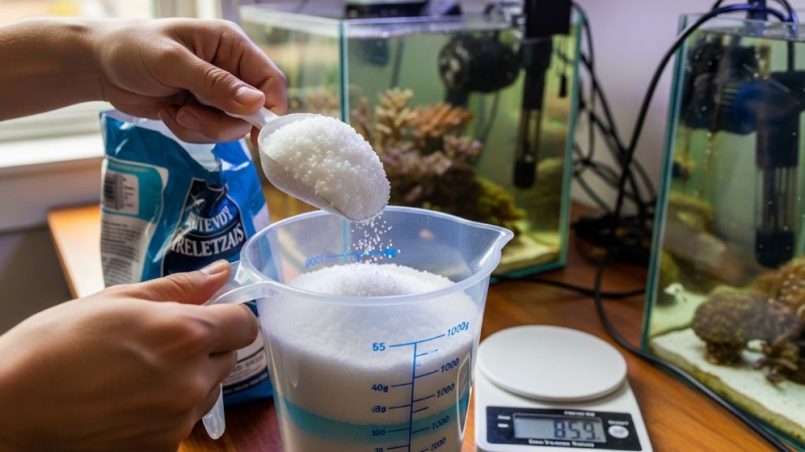
Choosing the right reef salt is one of the most important decisions you’ll make as a marine aquarium keeper. The salt you mix into your tank directly affects water chemistry, which in turn influences the health and vitality of every organism in your system. Quality salt provides the essential minerals and trace elements that corals, fish, and invertebrates need to thrive.
Not all aquarium salts are created equal. Some brands are formulated specifically for reef tanks with demanding corals, while others work better for fish-only systems. Understanding the differences between products helps you select salt that matches your specific needs and budget.
This comprehensive guide will help you navigate the world of reef salt options. You’ll learn what to look for in quality salt mixes, how different formulations affect your aquarium, and what factors matter most for long-term success. By the end, you’ll be equipped to make an informed choice that supports a thriving marine ecosystem.
Understanding Reef Salt Composition
Reef salt contains far more than just sodium and chloride. Quality mixes include dozens of major and trace elements that replicate natural seawater chemistry. These components work together to create an environment where marine life can flourish.
Major elements like calcium, magnesium, and potassium are present in relatively high concentrations. Calcium and magnesium are particularly important for coral skeletons and shell formation. Potassium supports various metabolic processes in both corals and fish.
Trace elements exist in much smaller quantities but remain essential for biological functions. Strontium, iodine, iron, and molybdenum all play specific roles in coral coloration, growth, and overall health. Premium salt mixes carefully balance these elements to match natural reef environments.
Additionally, alkalinity buffers maintain stable pH levels in your aquarium. These compounds prevent dangerous pH swings that stress livestock. Different salt brands offer varying alkalinity levels, which affects how you manage your tank’s chemistry.
The Difference Between Reef Salt and Basic Aquarium Salt
Understanding the distinction between reef-specific salt and basic marine salt helps you avoid costly mistakes. While both dissolve in water to create saltwater, their formulations serve different purposes.
Basic marine salt works well for fish-only systems that don’t house corals or other invertebrates with high mineral demands. These salts provide adequate major elements but often lack the elevated calcium and alkalinity levels that corals require. They’re typically less expensive because they contain fewer trace elements.
Reef salt, however, is specifically formulated for systems with stony corals, soft corals, and other invertebrates. These products contain higher concentrations of calcium and magnesium to support calcification. They also include more comprehensive trace element profiles.
Therefore, using basic salt in a reef tank often leads to deficiencies that require constant supplementation. Starting with proper reef salt simplifies saltwater tank maintenance and reduces the need for extensive dosing programs.
Matching Salt to Your System Type
Different aquarium types have varying chemical requirements. Selecting salt that matches your specific setup improves results and simplifies maintenance routines.
Low-nutrient reef systems housing SPS corals benefit from salt with elevated major elements. These demanding corals consume calcium and alkalinity rapidly. Salt mixed to higher parameters reduces the frequency and volume of supplementation needed.
Mixed reef tanks containing both soft and hard corals work well with standard reef salts. These formulations provide balanced chemistry that supports diverse livestock without excessive levels of any single element.
Fish-only-with-live-rock systems can use either reef salt or quality marine salt. While reef salt provides some advantages, the premium price may not be justified if you’re not keeping corals. A mid-range marine salt often suffices for these setups.
Soft coral and macro-algae systems have lower calcium demands than SPS-dominated tanks. Standard reef salt or even quality marine salt can work well, though reef salt still provides benefits through its trace element profile.
Evaluating Salt Quality and Consistency
Consistency between batches is crucial for maintaining stable water parameters. Quality manufacturers implement strict quality control to ensure every batch performs identically to the last.
Laboratory testing by independent third parties reveals actual element concentrations. Some manufacturers publish batch-specific test results online, allowing you to verify what you’re getting. This transparency indicates a commitment to quality.
Dissolution rate affects how easily salt mixes into water. Premium salts typically dissolve quickly and completely, leaving minimal residue. Poor-quality salt may leave undissolved particles or create cloudy water that takes hours to clear.
Additionally, packaging quality protects salt from moisture contamination. Resealable bags or buckets with tight-fitting lids keep salt dry between uses. Moisture causes clumping and can alter the salt’s chemical composition.
Look for salt that has been stored properly in retail environments. Salt exposed to high humidity or temperature extremes may not perform as expected. Purchase from reputable dealers who maintain proper storage conditions.
Price Versus Value Considerations
Reef salt spans a wide price range, from budget options to premium brands costing several times more. Understanding what drives these price differences helps you determine where to invest your money.
Expensive salts often include higher concentrations of major elements and more complete trace element profiles. They may also undergo additional purification steps to remove contaminants. These factors contribute to better coral health and growth rates.
However, mid-priced salts from established manufacturers often provide excellent value. They deliver consistent chemistry and adequate trace elements for most reef systems. The difference between mid-range and premium salt may be minimal for average hobbyists.
Calculate the per-gallon cost rather than just looking at package prices. Larger containers reduce per-gallon costs significantly. If you have space to store a large container and go through salt regularly, buying in bulk makes economic sense.
Consider your supplementation costs when evaluating salt. Cheaper salt with lower calcium and alkalinity may require extensive dosing, potentially eliminating any initial savings. Salt that mixes to appropriate levels for your system reduces long-term expenses.
Impact on Coral Health and Growth
The salt you choose directly influences how well your corals grow and color up. Proper major element levels and trace element availability make significant differences in coral vitality.
Calcium and alkalinity work together to build coral skeletons. Salt that provides adequate levels of both elements supports consistent growth without constant intervention. Coral health suffers when these elements become imbalanced or depleted.
Trace elements affect coral coloration and tissue health. While corals need only tiny amounts of these elements, deficiencies can cause color fading or reduced polyp extension. Quality reef salt maintains balanced trace element ratios that support vibrant colors.
Furthermore, pure salt without contaminants prevents the accumulation of harmful substances. Some lower-quality salts may contain elevated levels of phosphate, silicate, or heavy metals. These contaminants fuel algae growth and can stress sensitive corals over time.
Salt with balanced chemistry reduces stress on corals during water changes. Large parameter swings shock corals and can cause tissue recession. Consistent, well-formulated salt creates stable conditions that corals appreciate.

Mixing and Preparation Best Practices
Even the best salt won’t perform well if mixed incorrectly. Proper preparation techniques ensure you get the full benefit of quality salt formulations.
Always mix salt in clean containers dedicated to aquarium use. Residual soap, chemicals, or contaminants from other uses will end up in your tank. Mark mixing containers clearly to prevent accidental misuse.
Use RODI water rather than tap water for mixing. Tap water contains chlorine, chloramines, heavy metals, and other substances harmful to marine life. Reverse osmosis and deionization remove these contaminants, providing a blank slate for your salt mix.
Add salt gradually while circulating water with a pump. This prevents temporary high-concentration zones that can take a long time to fully dissolve. Slow, steady mixing produces more consistent results.
Allow freshly mixed saltwater to circulate for at least several hours before use. This ensures complete dissolution and allows temperature and pH to stabilize. Many reef keepers mix water a day ahead of water changes.
Test your newly mixed saltwater before adding it to your aquarium. Verify that salinity, alkalinity, and calcium match your tank’s parameters. This practice prevents shocking your livestock with significantly different chemistry.
Salinity Targets and Measurement
Mixing salt to the correct salinity is just as important as choosing quality salt. Too high or too low salinity stresses marine organisms and affects how other parameters behave.
Natural seawater has a specific gravity of approximately 1.025 to 1.026 at 77 degrees Fahrenheit. Most reef aquariums thrive when maintained within this range. Some hobbyists run slightly lower salinity around 1.024 for improved coral color, though this approach requires careful monitoring.
Refractometers provide the most accurate salinity measurements for reef aquariums. These optical instruments account for temperature and dissolved solids better than hydrometers. Calibrate your refractometer regularly with calibration solution to ensure accuracy.
Temperature affects salinity readings regardless of your measurement method. Always measure at the temperature your device is calibrated for, or use an ATC refractometer that compensates automatically. Temperature-corrected readings prevent dosing errors.
Additionally, salinity naturally increases as water evaporates from your aquarium. Top off with fresh RODI water to replace evaporation, not saltwater. Only add mixed saltwater when performing water changes that remove existing tank water.
Storage and Shelf Life
Proper storage extends the usable life of your reef salt and maintains its consistency. Understanding how environmental factors affect salt helps you preserve its quality.
Store salt in airtight containers away from moisture. Humidity causes clumping and can trigger chemical reactions that alter the salt’s composition. Keep containers sealed tightly between uses.
Avoid extreme temperatures during storage. While dry salt is relatively stable, significant temperature swings can affect some trace element compounds. Store in climate-controlled areas when possible.
Most reef salts remain viable for several years when stored properly. However, check manufacturer recommendations for specific shelf life guidance. Some formulations with elevated trace elements may have shorter recommended use periods.
Pre-mixed saltwater has a limited shelf life compared to dry salt. Use prepared saltwater within a week or two to prevent bacterial growth and chemical changes. Circulate stored water and keep it covered to minimize contamination.
Reading and Understanding Product Labels
Salt packaging contains valuable information that helps you make informed choices. Learning to interpret labels reveals important details about what you’re buying.
Guaranteed analysis sections list major element concentrations when mixed to specific gravity. Compare these values to your tank’s needs and supplementation routine. Salt with higher calcium and alkalinity reduces dosing requirements for coral-heavy systems.
Mixing instructions specify how much salt to use per gallon of water. Follow these carefully, as different brands require different amounts to reach the same salinity. Using measuring cups by volume rather than weight can lead to inconsistencies.
Manufacturing location and quality certifications indicate attention to quality control. Brands manufactured in facilities with ISO certifications or similar standards typically maintain better batch-to-batch consistency.
Additionally, many manufacturers now include batch-specific test results or QR codes linking to online test data. This transparency allows you to verify actual element concentrations rather than relying solely on general specifications.
When to Switch Salt Brands
Changing salt brands requires careful planning to avoid shocking your aquarium inhabitants. However, legitimate reasons exist for making a switch.
Persistent deficiencies despite regular water changes may indicate your current salt doesn’t meet your system’s needs. If you constantly dose to maintain parameters, switching to salt with higher major element concentrations might simplify saltwater tank maintenance.
Inconsistent batches from your current brand justify exploring alternatives. Variable chemistry between containers makes maintaining stable parameters difficult. Consistency matters more than having the absolute highest element levels.
Budget changes might prompt you to seek better value. However, never compromise quality for minimal savings. The health of your livestock is worth the cost of reliable salt.
When switching brands, transition gradually over several water changes. This prevents sudden parameter shifts that stress corals and fish. Monitor parameters closely during the transition period.
Conclusion
Selecting the best reef salt for your home aquarium involves balancing quality, consistency, and value. Understanding your system’s specific needs helps you choose formulations that support healthy coral health and simplify maintenance routines.
Quality reef salt provides the foundation for success by delivering balanced major elements and comprehensive trace element profiles. While premium brands offer advantages, mid-range options from reputable manufacturers often deliver excellent results for most hobbyists.
Proper mixing techniques and storage practices ensure you get full value from your salt investment. Combine quality salt with regular testing and consistent water changes for optimal results.
Remember that salt is just one component of successful reef keeping. However, it’s a fundamental one that affects virtually every aspect of your aquarium’s chemistry. Choosing wisely sets you up for long-term success with thriving corals and healthy marine life.
Frequently Asked Questions
Can I mix different brands of reef salt together?
While technically possible, mixing different salt brands is not recommended. Each manufacturer formulates their product with specific element ratios and concentrations. Combining brands creates unpredictable chemistry that may cause imbalances. Stick with one trusted brand for consistency. If you want to switch brands, transition gradually over multiple water changes rather than mixing products together.
How long does mixed saltwater stay good before use?
Properly prepared saltwater remains usable for one to two weeks when stored correctly. Keep it in a clean, covered container with circulation to prevent stagnation. After two weeks, bacterial growth and chemical changes may occur. For best results, mix saltwater within a few days of when you plan to use it. Never use saltwater that smells bad or appears cloudy.
Does more expensive salt always mean better results?
Not necessarily. While premium salts often contain higher element concentrations and more extensive trace element profiles, mid-priced options from established brands frequently perform excellently. The best salt for you depends on your system’s specific needs. A fish-only tank doesn’t benefit from premium reef salt formulated for demanding SPS corals. Match your salt to your livestock requirements rather than assuming price equals quality.
Should I adjust my salt brand based on coral types?
Different coral types have varying mineral demands, which can influence your salt choice. SPS-dominated tanks benefit from salt with elevated calcium and alkalinity levels. Soft coral and LPS systems work well with standard reef salt formulations. However, most quality reef salts support diverse coral populations. Your supplementation routine matters more than minor differences between reef salt brands for mixed systems.
How do I know if my reef salt has gone bad?
Salt that has absorbed moisture may clump together but isn’t necessarily bad. However, if salt develops an unusual smell, changes color significantly, or won’t dissolve properly, it may be contaminated. Check expiration dates and storage conditions. When in doubt, purchase fresh salt rather than risk introducing problems into your aquarium. Properly stored dry salt typically remains viable for several years.
Related Topics:
How to Grow Amazon Frogbit Successfully (Beginner Guide)
Protein Skimmer vs Canister Filter: Which Is Better for Reef Tanks?
