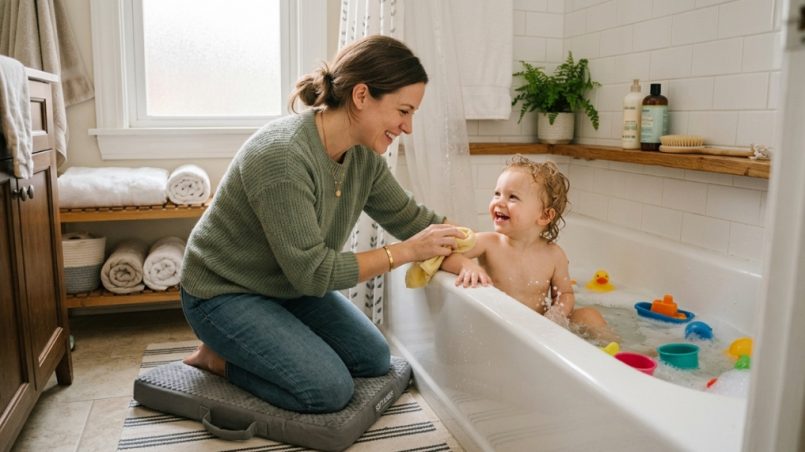
If you’re reading this, chances are you’ve spent a little too long with your knees pressed against a hard tub edge or a damp, chilly floor. It’s a classic bathroom problem that quickly turns a relaxing moment into an uncomfortable balancing act. Whether you’re giving your toddler a bath, scrubbing tiles, or simply need extra support while getting in and out of the tub, the right bath kneeler and pillow set can make a world of difference in your comfort and safety. In this comprehensive guide, we’ll walk you through exactly what to look for when shopping for the best bath kneeler and pillow set Michigan residents rely on for durability and comfort. We’ll cover everything from material and density to safety features and maintenance, so you can make a confident, informed purchase.
Key Takeaways
- Prioritize material quality: High-density foam and waterproof, quick-drying covers are essential for longevity in Michigan’s humid bathroom environments.
- Measure your space first: The dimensions of your tub edge and the floor area around your bathroom will determine whether a straight kneeler or a curved, tub-edge model fits correctly.
- Look for spinal alignment features: A set that includes a pillow specifically designed to cradle the chest while keeping the neck neutral will prevent lower back strain during extended use.
- Safety is about grip, not just cushioning: A slip-resistant base is your first and most important defense against painful falls on wet bathroom floors.
Why a Dedicated Bath Kneeler Set Beats a Regular Pillow
You might be tempted to grab any old pillow from the bedroom to kneel on, but that approach generally falls short. Regular pillows are designed for a soft head and are not engineered to withstand weight distribution across your knees for extended periods. A standard pillow will compress unevenly, causing wrist and ankle strain, and it will absorb water, leading to mildew growth in a damp environment.
Dedicated bath kneelers are crafted with dense, closed-cell foam that won’t flatten under pressure. This ensures your joints remain cushioned, and the water-resistant materials prevent the formation of mold and bacteria. Furthermore, these sets typically include a shaped chest pillow that is ergonomically contoured to fit between your upper body and the tub’s edge. This design supports your sternum and keeps your spine aligned, preventing the rounded-back posture that often leads to post-bath soreness.
Key Features to Compare in Bath Kneeler Sets
When evaluating different products, you’ll find they are not all created equal. Focusing on a few critical components will help you separate a durable, comfortable tool from a disposable one. Here is a breakdown of what matters most, If you love elevating your daily relaxation at home beyond just the bathroom, check out our guide on how to experience Luxury Hotel Pillow Comfort on a Budget.
Foam Density and Thickness
The core of any kneeler is its padding. You should look for a set that uses high-resilience polyurethane foam. Higher density (measured in pounds per cubic foot) indicates better support and less compression over time. As a general rule, a thickness of at least 1.5 inches for the knee pad is adequate, but 2 inches or more is preferable if you have any existing joint pain or spend more than a few minutes in a kneeling position at a time. The chest pad should be slightly thinner, around 1 inch, so it doesn’t push your shoulders into an unnatural, elevated position.
Waterproofing and Mold Resistance
In a state like Michigan, where humidity can fluctuate significantly throughout the year, ensuring your bathroom gear is fully waterproof is crucial. You should check if the foam core is sealed or if the cover is fully removable and washable. Closed-cell foam, by definition, repels water, unlike open-cell foam which acts like a sponge. However, many budget sets use open-cell foam wrapped in a vinyl or TPU (thermoplastic polyurethane) shell. While this works initially, a tear in the outer layer will eventually ruin the foam. For maximum longevity, look for a set that explicitly states “closed-cell foam” or has a “fully waterproof lining.”
Slip-Resistant Base
This is the most overlooked safety feature. Without a grippy bottom, a kneeler can slide forward when you shift your weight to lean over the tub, causing a sudden jolt or a fall. Look for a base that features a textured rubber or PVC pattern. The best designs have a honeycomb or suction-cup pattern that creates friction against the floor. Even if the kneeler is comfortable, if it doesn’t have a non-slip backing, it is a safety hazard. Always test the back with a bit of pressure to see if it stays put before using it near a full tub of water.
Material Matters: PVC vs. EVA Foam vs. Gel
Understanding the differences in construction materials can significantly impact your satisfaction with the product. Here’s a practical comparison based on feel, durability, and maintenance.
| Material | Pros | Cons | Best For |
|---|---|---|---|
| PVC (Vinyl) | Very durable, completely waterproof, easy to wipe clean, low cost. | Can feel cold in winter, may have a slight chemical smell initially, less breathable. | High-frequency use in hot, humid environments. |
| EVA (Ethylene-Vinyl Acetate) | Lightweight, flexible, good shock absorption, naturally closed-cell. | Can be slightly tacky to the touch, may flatten more quickly than PVC if low-quality. | General household use and occasional kneeling. |
| Gel-Infused | Excellent pressure distribution, helps cool the skin, very comfortable. | Heavier, significantly more expensive, can leak if damaged. | Users with chronic knee pain or specific injury recovery needs. |
While PVC is often praised for its durability, EVA foam provides a warmer, more comfortable experience. If you plan to use the kneeler primarily for gardening or light housework, EVA is a great choice. If this is strictly for the bathroom, prioritize PVC or a high-quality TPU-coated product for ease of sanitation.
Ergonomic Design: Understanding the Chest Pillow
The chest pillow is more than just a luxury extra; it is the component that protects your back. A good chest pad should be angled to follow the natural curve of your thorax. When you lean over the tub, the pad should support your ribcage and upper abdomen without putting pressure on your throat or neck. If the pad is too flat, you will still end up arching your back. If it is too thick, it will lift your shoulders and compress your neck.
Some higher-end sets feature an adjustable angle mechanism for the chest pad. While this is a nice feature, it adds moving parts that can break. For most users, a fixed, ergonomically curved pad is sufficient. Pay attention to the width of the pillow—it should be wide enough to prevent your arms from slipping off the edges but narrow enough to allow your elbows to bend comfortably at a 90-degree angle.
Local Considerations for Michigan Households
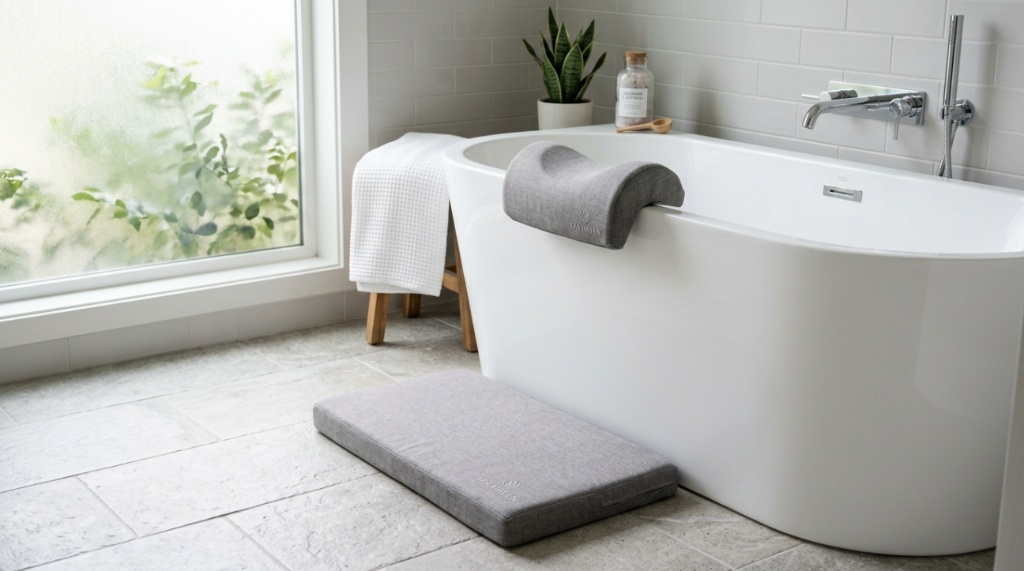
Michigan’s climate and housing styles present unique factors that often get ignored in generic online reviews. Think about the specific bathroom environment you’re working with before making a final choice.
Dealing with Hard Water Stains
If your home has hard water, mineral deposits can build up on everything, including your new kneeler. When you leave a kneeler on a wet bathroom floor, the water evaporates and leaves behind calcium deposits that can make the surface rough and uncomfortable. To avoid this, you should choose a set with a slicker surface (like PVC). Wiping it down with a vinegar solution weekly will help keep it soft and pliable. Additionally, hanging the kneeler to dry on a hook after each use will prevent these deposits from accumulating on the foam itself.
Cold Winter Floors
Your bathroom floor in Grand Rapids or Detroit can get extremely cold during those long winter months. There is nothing worse than kneeling down onto a freezing vinyl pad. EVA foam retains heat much better than PVC, making it a more comfortable choice for the colder seasons. If you strictly prefer PVC for durability, consider placing a thin thermal mat underneath it, or simply accept the initial chill until your body heat warms it up.
How to Measure Your Space for the Perfect Fit
Achieving proper fit is not about the product’s dimensions listed on the box, but about how it fits your specific tub and body. Here is a practical guide to measuring before you buy:
- Measure the tub rim: Use a tape measure to find the width of your bathtub’s edge. The chest pillow should not hang off the edge by more than an inch, as this will cause it to tilt forward. Most standard tubs are 5 to 6 inches wide, so a compact 12-inch-wide chest pad generally works best.
- Test your kneeling position: Stand next to the tub and kneel down on a towel. Notice the distance between your knees and the tub. This distance tells you the length your knee pad should be. If your knees are 18 inches from the tub, a 16-inch knee pad is ideal, leaving just enough room for you to lean forward without your knees hitting the wall.
- Check clearance: Ensure there is at least 2–3 inches of clearance between the bottom of the chest pillow and the top of the knee pad while you are in position. This prevents the pads from sliding together and pinching your skin.
Maintenance and Cleaning: Extending the Life of Your Set
To get the most value out of your investment, establish a simple cleaning routine. Since these items live in high-moisture environments, proactive maintenance is key to preventing premature breakdown and keeping them hygienic.
- Rinse after use: Quickly rinse the set with warm water after every bath. This removes soap scum and shampoo residue, which can degrade the materials over time.
- Air dry completely: Do not fold or stack the pads while wet. Hang them over the side of the tub or on a towel bar to let air circulate around all surfaces. Folding a wet kneeler causes creases that can turn into cracks.
- Deep clean weekly: For PVC or vinyl sets, wipe them down with a 50/50 mixture of white vinegar and water to dissolve hard water spots. For EVA foam, use a mild dish soap and warm water—avoid bleach, as it can break down the foam structure.
Common Mistakes to Avoid When Buying
It is easy to get swayed by a cute pattern or a low price tag. However, there are a few specific pitfalls that consistently lead to buyer’s remorse. Avoiding these will save you time and money.
Mistake #1: Buying a one-piece unit. A one-piece kneeler and pillow combo is rarely ergonomic. Because it cannot adjust to your body size, the distance between the knee pad and chest pad is likely wrong for you. You’ll end up either stretching your spine or crushing your ribs. Always opt for a two-piece set that allows you to position the pads independently.
Mistake #2: Ignoring weight capacity. Most standard kneelers are rated for weights up to 250 pounds. If you are heavier, the foam will bottom out, and you will feel the hard floor immediately. Look for a “heavy-duty” or “XL” version with a higher density foam rating.
Mistake #3: Choosing style over function. That plush, microfiber top might look luxurious, but it is a magnet for hair, dust, and mildew. Stick to smooth, waterproof surfaces that are easy to sanitize. Your comfort should come from the foam density, not the surface fabric.
Final Recommendations for Michigan Shoppers
When you’re ready to make a purchase, focus on finding a set that combines non-slip functionality with high-density foam. A set with a PVC cover and a 2-inch thick EVA foam core is the sweet spot for most households. This combination offers the warmth of EVA with the easy-to-clean durability of PVC. Before checking out, verify the warranty. Some manufacturers offer a one-year warranty against material defects, which is a good indicator of quality. Always read recent reviews specifically from Michigan residents if possible, as they can give insights into how the product handles the specific hard water conditions in your area.
Frequently Asked Questions
Can I use a bath kneeler on a textured or brushed concrete floor?
Yes, you can, but you need to verify that the non-slip base has a strong grip. Textured concrete can sometimes reduce the suction effect of a smooth rubber base. Look for a kneeler with aggressive rubber nubs rather than a smooth suction pattern if you have this type of flooring.
How do I remove the chemical smell from a new PVC kneeler?
Wash the kneeler with a mixture of warm water and baking soda, then rinse thoroughly. Place it outside or in a well-ventilated room to air out for 24–48 hours. Avoid using harsh chemical cleaners like bleach, which can react with the plastic and produce more fumes.
Is it better to get a larger set or a compact one?
It depends on your physical size and the width of your bathtub. Compact sets (shorter than 20 inches total) are better for small tubs or tight bathrooms. Larger sets offer more surface area for your knees but can be awkward to store and may not fit your tub rim properly. Measure your space first to make the right call.
Can the chest pillow be used for nursing or other purposes after the bath?
While it is possible, it is not recommended. The chest pillow is designed specifically for the hard angle of a bathtub and is covered in waterproof material that may not be breathable for direct skin contact over long periods. It’s best to keep the pads dedicated to bathroom use to maintain hygiene.
How often should I replace my bath kneeler set?
With proper care and maintenance—specifically rinsing and drying after each use—a high-quality set should last between 12 and 18 months. If you notice the foam has permanently compressed to less than 60% of its original thickness, or if you see cracks in the waterproof cover, it’s time for a replacement.
Conclusion
Choosing the best bath kneeler and pillow set for your home comes down to matching the materials and design to your specific bathroom environment and personal comfort needs. You want a set that offers robust support for your joints, protects your spine with an ergonomic chest pillow, and features a non-slip base to keep you stable on wet surfaces. By prioritizing closed-cell foam or durable PVC construction and measuring your space carefully, you can find a set that will make bath time and cleaning tasks far more comfortable. Remember to check the maintenance requirements and follow a simple rinse-and-dry routine to extend the life of your purchase. With the right selection, you can say goodbye to sore knees and hello to a safer, more enjoyable bathroom experience.