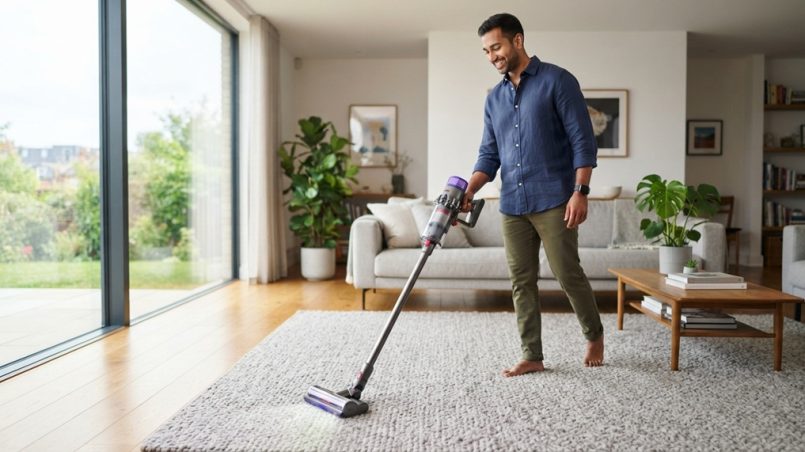
Buying a cordless stick vacuum for a whole home is a significant decision. You are not just picking a quick clean-up tool; you are choosing a primary cleaning machine for different floor types, multiple rooms, and possibly pets. The challenge is that specifications on a box rarely tell you how a vacuum performs in real life. Battery life claims can be misleading, and suction power numbers do not always translate to actual dirt pickup. This guide provides a practical, hands-on testing framework to help you evaluate cordless stick vacuums for whole homes before you commit, ensuring you select a model that genuinely fits your living space and cleaning habits.
Why Standard Specs Are Not Enough
Manufacturer specifications like air watts, RPM, and battery voltage give you a baseline, but they do not reflect real-world performance. A vacuum might have impressive numbers on paper yet struggle with a thick rug or fail to pick up pet hair from a couch. Testing is about observing how the machine handles the specific challenges in your home. You need to evaluate the interaction between the vacuum’s design and your environment, not just the motor’s potential.
Understanding the Real-World Variables
Several factors influence how a vacuum performs in your home that a spec sheet cannot capture. These include the height of your carpet pile, the hardness of your flooring, the size of your rooms, and the amount of natural light that shows dust. A vacuum that excels on low-pile carpet might struggle on a high-pile rug. Similarly, a model with a wide cleaning path might be less maneuverable in tight corners. Your testing should replicate your home’s conditions as closely as possible.
How to Test Suction Power and Carpet Cleaning
Suction power is the most critical factor for cleaning carpets and rugs. To test this effectively, you need to simulate the worst-case scenario your vacuum will face. Start with a simple test: sprinkle a small amount of flour or baking soda into a low-pile carpet and rub it in with your foot. This simulates ground-in dust. Then, run the vacuum over the area slowly, just as you would during a regular cleaning session.
Check the results in good lighting. Did the vacuum pick up the flour in one pass, or did it take multiple attempts? Look closely at the edges of the cleaning path. Many vacuums miss debris along baseboards and walls. A good test is to deliberately push some flour against the baseboard and see if the vacuum’s edge cleaner or brush roll picks it up effectively.
Testing on Different Carpet Piles
If you have multiple types of carpet in your home, test on each one. A vacuum that works well on a flat, low-pile carpet may struggle on a plush, high-pile carpet. The brush roll needs to maintain contact with the carpet surface to agitate and lift dirt. On high-pile carpets, some vacuums have a tendency to “shut off” or stall because the brush roll becomes too difficult to turn. Pay attention to whether the vacuum feels like it is pulling itself forward or if it becomes difficult to push. This is a sign that the brush roll is working hard, but it can also indicate poor design for that specific carpet type.
Evaluating Hard Floor Performance
Cleaning hard floors presents a different set of challenges. The primary concern is not just suction, but also the type of brush roll. A hard bristle brush roll can scatter debris or scratch delicate floors. Many modern vacuums offer a “hard floor mode” that either stops the brush roll or uses a softer roller. Test this feature by spreading a line of cereal or rice across a hard floor. Run the vacuum over it and observe if the debris is picked up or if it gets flicked forward, away from the vacuum head.
Also, check the front of the vacuum head. Does it have a soft bumper or a felt strip? This helps prevent scratching baseboards and furniture. A good hard floor vacuum should also have a seal between the head and the floor to maximize suction. You can test this by trying to pick up a heavier object, like a coin. If the vacuum struggles to lift it, the seal might not be sufficient for your needs.
Battery Life Testing for Whole-Home Cleaning
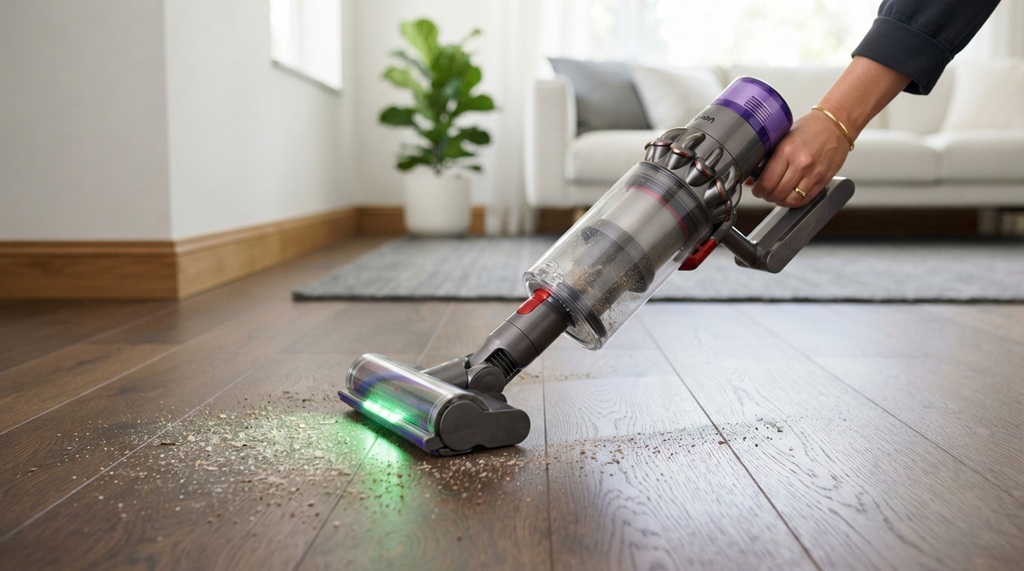
Battery life is the most common pain point for cordless vacuums. The advertised runtime is usually measured with the vacuum on a low-power setting and without a motorized brush roll attached. This is not how you will use it. To test battery life realistically, you need to use the vacuum in the mode you would typically use for a full house clean. This usually means using the “auto” or “medium” power setting with the motorized floor head attached.
Time the vacuum from a full charge until the battery dies or the power noticeably fades. This will give you a realistic estimate of your cleaning time. Also, pay attention to how the vacuum behaves as the battery drains. Does it maintain consistent suction until the end, or does it gradually lose power? Some vacuums have a “boost” mode that provides maximum suction for a short period. Test this mode to see how quickly it drains the battery. It is useful for spot cleaning but not for a whole-home session.
The Importance of Swappable Batteries
For a whole home, a vacuum with a removable battery is a significant advantage. If the battery dies before you finish cleaning, you can simply swap in a charged spare and continue. This effectively doubles your cleaning time. When testing, check how easy it is to remove and insert the battery. Is it a simple release button, or does it require fiddling? A well-designed battery system should be intuitive and secure.
Maneuverability and Weight Distribution
A vacuum can have great suction and battery life, but if it is awkward to use, you will not want to clean. The weight of the vacuum is important, but how that weight is distributed matters more. A vacuum that is heavy at the top will be tiring to push and pull, especially under furniture. When testing, pay attention to how the vacuum feels in your hand. Is the center of gravity near your hand, or is it pulling your arm down?
Test the swivel head. A good swivel head should allow you to turn the vacuum easily around chair legs and table legs without having to lift the machine. Try navigating a slalom course around your dining room chairs. Does the vacuum follow your lead, or does it fight you? Also, test the low-profile reach. Can you easily slide the vacuum head under your sofa or bed? The height of the head and the angle of the neck are critical for this.
Filtration and Dust Management
Filtration is crucial for maintaining indoor air quality, especially for allergy sufferers. A vacuum with poor filtration will blow fine dust particles back into the air. Most modern cordless vacuums use a multi-stage filtration system with a HEPA filter. To test this, you can shine a bright light (like a flashlight) across the exhaust stream while the vacuum is running. If you see dust particles being blown out, the filtration is not effective.
Also, consider the dustbin design. How easy is it to empty? Look for a mechanism that allows you to empty the bin without getting your hands dirty. A “point and shoot” or “push-button” release is common. When you empty the bin, does the bottom flap open cleanly, or does dust get caught in the seal? A poorly designed bin can create a cloud of dust every time you empty it, which defeats the purpose of good filtration.
Evaluating Filter Maintenance and Washability
Assessing how often a filter requires maintenance and how straightforward the removal process is determines the long-term usability of a cordless stick vacuum, as models with washable components that rinse clean under water offer superior convenience and cost-efficiency compared to those requiring tedious manual tapping, while inspecting the trapped debris during testing reveals exact upkeep intervals, ensuring that hard-to-reach filter compartments do not become an unexpected everyday chore that compromises the cleaning experience or integrates seamlessly with related home improvement upgrades like those detailed in our guide on resin driveway costs explained.
Practical Testing Scenarios for Your Home
Beyond the individual tests, you should conduct a few “whole-home” scenarios to see how the vacuum performs in a sequence of tasks. This helps you understand the transition between different floor types and cleaning modes.
Scenario 1: The Multi-Room Clean
Start by vacuuming a large, open area of hard floor. Then, transition to a medium-pile area rug. Finally, use the vacuum to clean a fabric sofa or upholstered chair. This test will show you how easy it is to switch between floor types and how the vacuum handles above-floor cleaning. Pay attention to the tools you need to switch to for the upholstery. Is the tool easy to attach and detach? Does the vacuum remain stable when using the hose and tools, or does it tip over?
Scenario 2: The Pet Hair Challenge
If you have pets, this is the most important test. Sprinkle some pet hair (or use a bit of lint from the dryer) onto your carpet and upholstery. Run the vacuum over it. Does the brush roll pick it up, or does it wrap around the brush? Check the brush roll after the test for tangled hair. Some vacuums have anti-tangle technology that is more effective than others. Also, test the crevice tool on a tight corner where pet hair often accumulates. A good crevice tool should have enough suction to pull hair out from the baseboards.
Frequently Asked Questions
How long should a cordless stick vacuum battery last for a whole home?
For a typical home, you should look for a runtime of at least 30 to 40 minutes on a standard or auto power mode. This usually provides enough time to clean a small to medium-sized home. For larger homes, consider models with a runtime of 60 minutes or more, or those with a swappable battery system so you can double your cleaning time.
Is a cordless stick vacuum as powerful as a corded upright vacuum?
Generally, no. Corded vacuums have a continuous power supply, which allows for more consistent and often stronger suction. However, modern cordless stick vacuums are powerful enough for most daily cleaning tasks, including carpets and hard floors. They are ideal for quick pickups and whole-home cleaning in smaller spaces, but a corded model may still be better for deep cleaning large, carpeted areas.
Can I use a cordless stick vacuum on all floor types?
Yes, most cordless stick vacuums are designed to handle multiple floor types, including hardwood, tile, laminate, and low-to-medium pile carpets. However, you should always check the manufacturer’s instructions. Many models have a specific setting or a brush roll that is optimized for hard floors to prevent scratching and to avoid scattering debris.
How often should I clean the filter on my cordless stick vacuum?
This depends on usage. As a general rule, you should check the filter once a month and clean it when it appears dusty. If you have pets or vacuum frequently, you may need to clean it more often. A clogged filter reduces suction and can put extra strain on the motor. Most washable filters should be rinsed and left to air dry completely for 24 hours before being replaced.
What is the best way to store a cordless stick vacuum?
The best storage method is to use the wall-mounted docking station that comes with most models. This keeps the vacuum charged and ready to use while taking up minimal floor space. If you cannot mount it on a wall, you can store it freestanding, but be aware that some models can be top-heavy and may tip over. Always store it in a dry area to prevent damage to the battery and motor.
Conclusion
Choosing the right cordless stick vacuum for your whole home requires looking beyond the marketing claims and focusing on how the machine performs in your specific environment. By testing suction on different surfaces, evaluating realistic battery life, and assessing maneuverability and filtration, you can make an informed decision that you will be happy with for years. Remember that the best vacuum is not necessarily the most expensive one, but the one that fits your home’s layout, your flooring, and your cleaning habits. Take the time to run these practical tests, and you will find a model that makes cleaning your entire home easier and more efficient.