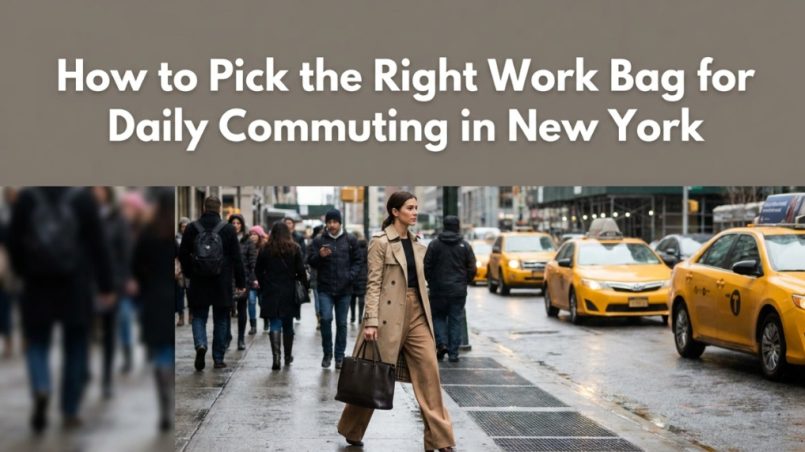
New York City destroys bags. The subway turnstile scrapes your leather. The rain hits sideways between buildings. The packed 6 train crushes whatever you’re carrying against strangers’ backpacks. And you still need to walk into a meeting looking like you didn’t just survive a contact sport. Picking the right work bag for daily commuting in New York isn’t the same as choosing a bag anywhere else — it requires materials that handle urban abuse, designs that function in cramped spaces, and construction that survives 500+ days of subway, sidewalk, and office use per year. Most “commuter bag” guides are written by people who drive to work. This one is written for the 5.5 million New Yorkers who fight for space on public transit every single morning.
The average NYC commuter spends 43 minutes each way on their daily commute — that’s 360+ hours per year with a bag on their shoulder, across their body, or wedged between their feet on a crowded train. Your work bag takes more physical punishment in one New York winter than most bags experience in five years of suburban car commuting. That’s why material choice, hardware quality, and ergonomic design matter exponentially more here than anywhere else. Here’s how to choose a work bag that survives — and thrives — in the most demanding commute environment in America.
What Makes a Work Bag Suitable for New York City Commuting?
A NYC-suitable work bag must be water-resistant, slim enough for packed subway cars, equipped with secure closures against pickpockets, and constructed from materials that resist scuffing from constant contact with urban surfaces.
NYC-specific requirements most bags fail:
- Slim profile: Bulky bags block subway doors and earn hostile stares. Maximum depth should be 6–7 inches when packed.
- Water resistance: NYC rain is horizontal, sudden, and unavoidable. Your bag needs sealed zippers or flap closures, not just “water-resistant fabric.”
- Secure closures: Crowded trains mean hands near your bag constantly. Zippered compartments with interior pockets for valuables are essential.
- Scuff resistance: Your bag touches subway floors, taxi seats, restaurant floors, and office chairs daily. Materials must resist marking.
- Quick-access pocket: MetroCard/OMNY tap, phone, and building access card need to be reachable without opening the main compartment.
- Comfortable for standing: You’ll stand holding your bag for 20–40 minutes. Weight distribution and grab handle quality matter.
Which Bag Style Works Best on the NYC Subway?
Slim professional backpacks and structured messenger bags perform best on NYC subways because they stay close to your body, don’t block doors, and can be held between your feet when seats are unavailable.
Subway performance by bag style:
| Bag Style | Subway Score | Pros | Cons |
|---|---|---|---|
| Slim Backpack | 9/10 | Hands-free, slim profile, easy to swing to front | Must remove for crowded cars (etiquette) |
| Structured Messenger | 8/10 | Quick access, stays at side, professional look | Shoulder strain on long commutes |
| Briefcase | 7/10 | Most professional, slim, sits on lap easily | Occupies one hand, limited capacity |
| Tote | 6/10 | Easy access, professional for women | No closure (security risk), items shift |
| Large Backpack | 4/10 | Maximum capacity | Blocks doors, hits people, too bulky |
NYC subway etiquette rule: if the train is crowded, take your backpack off and hold it at your feet or on your lap. A bag that’s easy to remove and hold (with a good top handle) scores higher than one that’s awkward to take off in tight spaces.
What Size Work Bag Is Ideal for NYC Professionals?
A 18–25 liter bag with maximum dimensions of 17″H x 12″W x 6″D fits NYC commuting perfectly — large enough for a laptop and daily essentials, slim enough for subway etiquette, and professional enough for any office.
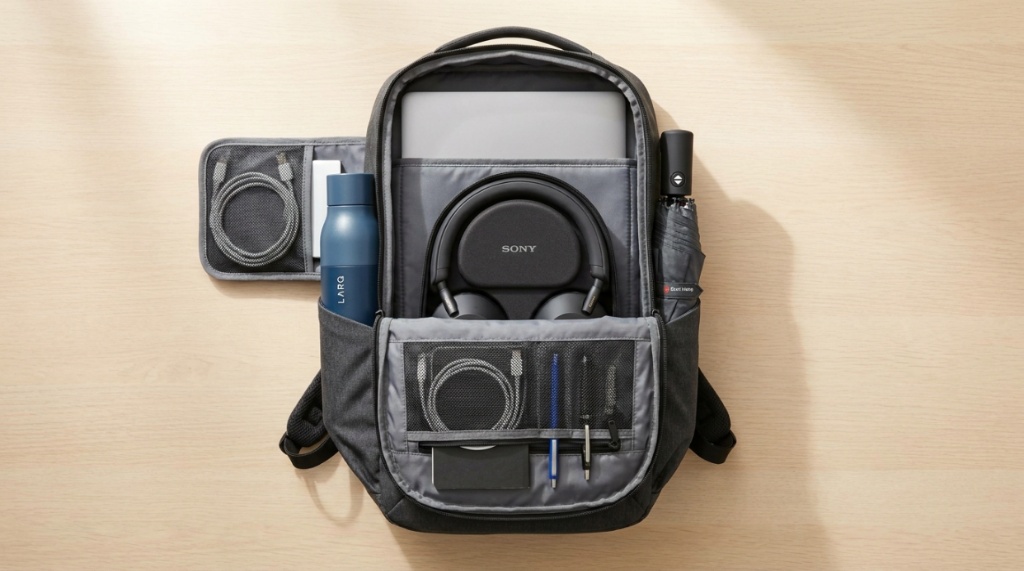
What fits in an ideal NYC work bag:
- 13–15 inch laptop in padded sleeve
- Laptop charger and phone charger
- Compact umbrella (essential in NYC)
- Water bottle (slim, 16–20 oz)
- Notebook or tablet
- Wallet, keys, phone, earbuds
- Small lunch container or snack
- Building access card and MetroCard
What should NOT go in your daily NYC work bag:
- Gym clothes (use a separate gym bag or locker)
- Full-size umbrella (compact only — full-size drips on everyone)
- Multiple pairs of shoes
- Anything that makes the bag wider than 7 inches
How Do You Protect Your Laptop During a NYC Commute?
Use a bag with a suspended laptop sleeve — a compartment that keeps your laptop elevated from the bag’s bottom so it never contacts the ground when you set the bag down, even on wet subway platforms.
Laptop protection features ranked by importance:
- Suspended/floating sleeve: Laptop hangs above the bag’s base. If you drop the bag or set it on wet ground, the laptop stays protected. This is the #1 feature for NYC commuters.
- Dedicated compartment (separate from main): Keeps laptop isolated from water bottles, food containers, and other items that could leak or shift.
- Padding thickness: Minimum 1cm closed-cell foam on all sides. Premium bags use 1.5–2cm. Thin felt sleeves offer minimal drop protection.
- Secure closure: Velcro or magnetic flap that prevents the laptop from sliding out if the bag tips over.
- Water-resistant compartment lining: Even if the exterior gets soaked, the laptop compartment stays dry.
NYC-specific risk: setting your bag on a wet subway platform floor. This happens daily during rain. A suspended laptop sleeve means the difference between a dry laptop and a $1,500 repair bill.
What Materials Survive NYC Weather and Urban Wear?
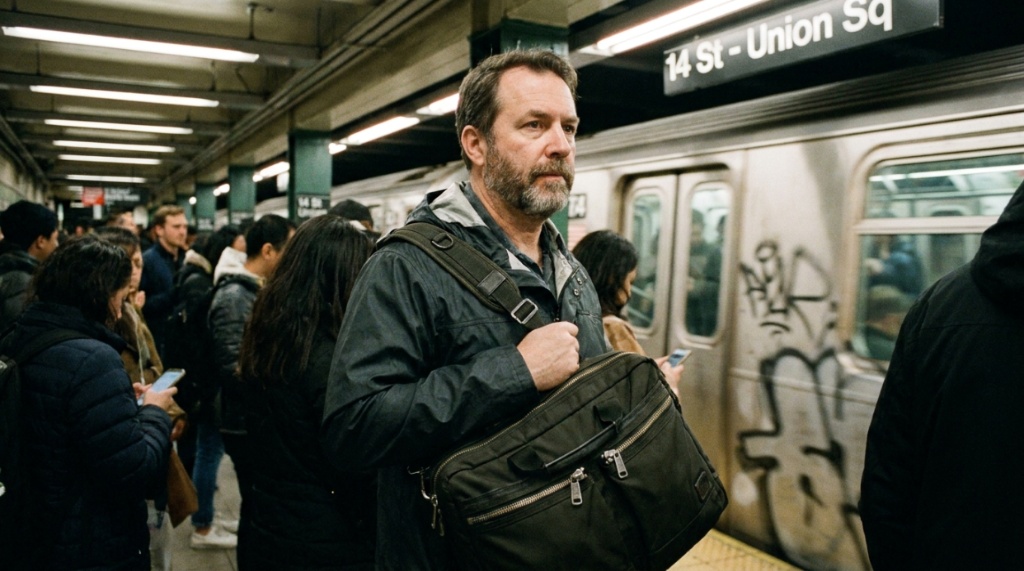
Ballistic nylon (1680D) and treated full-grain leather handle NYC conditions best — resisting rain, scuffing, subway grime, and daily abrasion while maintaining professional appearance for years.
NYC material performance:
- Ballistic nylon: Virtually indestructible. Resists water, scuffs, and tears. Wipes clean easily. Looks professional in dark colors. The workhorse choice for NYC commuters.
- Full-grain leather (treated): Develops character with NYC wear. Water-resistant when properly conditioned. Scuffs can be buffed out. Looks better with age. Heavier than nylon.
- Waxed canvas: Good water resistance, vintage aesthetic. Handles rain well but shows wear patterns faster than nylon. Needs re-waxing in NYC’s wet climate.
- Recycled polyester (RPET): Eco-friendly, lightweight, decent durability. Less water-resistant than ballistic nylon. Good for budget-conscious commuters.
- Avoid in NYC: Suede (water destroys it), untreated canvas (absorbs everything), bonded leather (peels within months), thin polyester (tears on subway hardware).
How Do You Keep Valuables Secure on Crowded NYC Trains?
Use bags with zippered main compartments, interior security pockets for phone and wallet, and wear messenger bags with the flap facing your body — not outward toward the crowd.
Security features for NYC commuting:
- Zippered main compartment: Open-top totes are invitations for theft on crowded trains. Always choose bags that close completely.
- Hidden back panel pocket: A flat pocket against your back (on backpacks) is virtually inaccessible to pickpockets. Store phone and wallet here.
- Interior zip pocket: For passport, cash, or high-value items. Accessible to you but invisible to others.
- RFID-blocking pocket: Prevents contactless card skimming in crowded spaces. Available in many modern commuter bags.
- Cut-resistant straps: Some premium bags use steel-cable-reinforced straps that can’t be slashed. Extreme but relevant for high-value contents.
Behavioral security tips:
- Swing backpacks to your front on crowded trains
- Keep messenger bag flaps facing your body
- Never leave your bag unattended — even for 30 seconds
- Use the bag’s internal pockets rather than external ones for valuables
Navigating the hustle of the city transit system requires gear that balances durability with style. Choosing the right bag can completely transform your morning routine, keeping your laptop secure and your hands free on a crowded subway car. When you invest in a piece designed specifically for urban transit, you ensure that your daily essentials stay organized and protected against unpredictable weather and tight spaces.
What Are the Best Work Bag Brands for NYC Commuters?
Tumi, Aer, Bellroy, Troubadour, and Filson consistently produce bags that handle NYC commuting demands — combining professional aesthetics with urban durability and intelligent organization.
Brand recommendations by style:
- Tumi Alpha Bravo: The NYC corporate standard. Ballistic nylon, excellent organization, professional look. $300–$600. Seen in every Midtown elevator.
- Aer City Pack / Day Pack: Modern minimalist design, excellent for tech professionals. Water-resistant, slim profile. $150–$250.
- Bellroy Transit Workpack: Australian design, premium materials, thoughtful organization. Slim enough for subway, professional enough for meetings. $200–$300.
- Troubadour Goods: British luxury meets NYC functionality. Waterproof fabrics, leather accents, lifetime warranty. $300–$500.
- Filson: Rugged heritage aesthetic. Waxed canvas and leather. Built for decades of use. Better for creative industries than corporate. $200–$400.
- Away (The Backpack): Clean design, water-resistant nylon, laptop sleeve, luggage pass-through. Good entry-level option. $195–$245.
How Should Your Work Bag Handle the Transition from Commute to Office?
The best NYC work bags look equally appropriate tucked under a subway seat and sitting on a conference table — achieved through clean design, structured shape retention, and materials that don’t show transit wear.
Commute-to-office transition features:
- Shape retention: Bags that collapse or sag when set down look unprofessional in meetings. Structured panels maintain form.
- Clean bottom: Reinforced, wipeable base that doesn’t show subway floor contact. Some bags have removable base panels for cleaning.
- Hideaway straps: Backpack straps that tuck away when carrying by handle in professional settings.
- Minimal external branding: Large logos scream “consumer product.” Subtle or no branding reads as professional confidence.
- Neutral colors: Black, navy, and charcoal transition between any outfit and any office environment without clashing.
Conclusion
Picking the right work bag for NYC commuting means choosing a bag designed for urban combat — not suburban car rides. Your bag needs to survive rain, crowds, subway floors, and daily physical contact while still looking professional enough for client meetings and office environments. The NYC commute is uniquely demanding, and generic “commuter bag” advice doesn’t account for the specific challenges of public transit, weather exposure, and security concerns that define daily life here.
Invest in water-resistant materials, slim profiles, secure closures, and suspended laptop protection. Choose a brand with proven NYC durability — not just Instagram aesthetics. And test your bag loaded on a real commute before committing. The bag that looks perfect in a store may fail completely on a packed L train during rush hour. Choose for function first, style second — then find the bag that delivers both.
What’s your NYC commute route and what do you carry? Share in the comments — I’ll recommend specific bags that handle your exact subway line and office environment.
Frequently Asked Questions
What is the best work bag for the NYC subway?
A slim professional backpack (18–25L) with water-resistant material, suspended laptop sleeve, and quick-access transit card pocket performs best on NYC subways. Brands like Aer, Bellroy, and Tumi design specifically for urban transit commuters.
How do I protect my bag from NYC rain?
Choose bags made from ballistic nylon or treated leather with sealed zippers or flap closures. Apply DWR (Durable Water Repellent) spray every 3–6 months. For extreme rain, carry a packable rain cover ($15–$30) that fits over your bag completely.
Is a backpack or messenger bag better for NYC commuting?
Backpacks distribute weight better for long commutes (40+ minutes) and free both hands for holding subway poles. Messenger bags offer quicker access and easier removal in tight spaces. For commutes over 30 minutes, backpacks win on comfort. For shorter commutes, either works.
How much should I spend on a work bag for NYC?
Budget $200–$400 for a bag that survives 3–5 years of daily NYC commuting. The city’s weather, crowds, and surfaces destroy cheap bags within months. Investing in quality materials (ballistic nylon, full-grain leather) saves money long-term through avoided replacements.
What size laptop bag fits under a subway seat?
Bags under 7 inches deep and 18 inches tall fit comfortably under standard NYC subway seats. Slim briefcases and compact backpacks work best. Avoid bags wider than 13 inches — they’ll stick out into the aisle and get kicked by standing passengers.
Are anti-theft bags necessary for NYC?
NYC is generally safe, but crowded trains create opportunity for pickpockets. Bags with zippered closures, hidden back-panel pockets, and RFID-blocking compartments provide practical security without paranoia. You don’t need slash-proof straps — just smart pocket placement and awareness.
Can I use the same bag for commuting and weekend travel?
Yes — choose a 25–30L bag with a luggage pass-through sleeve and expandable compartment. Brands like Away, Aer, and Bellroy design bags that function as daily commuters and weekend travel bags. This dual-purpose approach saves money and closet space.